Tag: career transition

  • Savoring Slowness

    Savoring Slowness

    Hello, loyal followers and subscribers! And by that, I mean my mom. Hi, Mom! I love you and miss you. Thanks for being my number one fan. 

    Anyways, apologies for the unexpected hiatus. I did not intend to take a summer vacation from writing. But trust, I have been writing. Just nothing public. I’ve been writing short stories, poetry, journal entries, shopping lists, invitation cards, emails, and cover letters.

    I’ve been absorbing enough sunshine in my skin to last me all winter. I’ve been standing in my kitchen, performing the sacrificial rituals of splitting tomatoes, squishing blueberries, and weeping as I slice through onions. I’ve been floating atop canyons and mountains under the cobalt blue water, feeling the fluid stability of ancient waters holding my body as I breathe in and out. I’ve been peaking through my eyelids in the darkest hours of night to glimpse the shimmering galaxies splayed across the blackish-bluish sky. I’ve been waking up to the rhythmic tap of raindrops on my tent, unzipping the flap, and scanning the dew-covered spider silk amidst the komorebi for fairies. For it is in these dense forests, in the space between cities and wilderness, that they appear. I wonder if they are charmed or offended when we dress up as them in our flowing skirts and dresses, skin sparkling with glitter, flowers tucked in our hair, chests bare to the glaring summer sun. I’ve been laughing, crying, laying on my bed, staring at the ceiling, thinking about the precious yet precarious nature of life. All the things you do in your 20s when you live in the Pacific Northwest.

    Though I haven’t put my creative works out to the public for the summer, make no mistake, I have been creative. One of my biggest creative projects was moving. I moved into a big house with my five closest friends. We’ve seen each other through all phases and stages of life. From childhood sleepovers, awkward preteen phases, and high school drama (we were theater geeks), to navigating the salty seas of young adulthood. These friendships have lasted longer than any romantic relationship, any job, any lease we’ve been through. Now, we share a home together, and it has been one of the grandest creative projects of my life. How do we puzzle piece all our furniture together? Where does our art go? What goes in the dishwasher? Which kitchen drawer should have the silverware? When do we water the garden? Whose laundry day is it? 

    We’ve lived here for two months, and we’re just getting settled in. The stack of unpacked boxes keeps moving from room to room, unsure where the final home of its contents will end up. And just because I didn’t feel like moving was enough chaos, I quit my job. I left my secure and stable position as a teacher– a role I grew to thrive in and adore– to start my career as a professional writer. It was nerve wracking and anxiety inducing, and still is. I pushed out a nervous laugh every time someone asked where I was going next. “I don’t know yet! Why? Are you hiring?” I’d tease. They usually smiled and said, “Good luck!” with undertones that said, “You’re gonna need it.” 

    So, here I am. Floating through space. Existing in this in-between time where I don’t know how it’s all going to work out, so I have to cling to this liferaft of blind faith that it’s already working out. Having a job I was good at, a title I could claim, was all false reassurance. It gave me a false sense of security that I knew what I was doing with my life. As if my existence could be simplified to a job title. But isn’t it nice to have an answer when someone asks what you do? Isn’t it soothing to have people smile and nod when you tell them what your job is? So they can better understand you and, by proxy, you can better understand yourself?

    To quote Tibetan Buddhist Chögyam Trungpa, “The bad news is you’re falling… The good news is, there’s no ground.” 

    Regardless of where I live, who my friends are, what my job is, I am always me. These are just decorations to the essence of who I really am. And who I really am is indescribable. Once you think you know, it changes again. I’m not rushing to know, to find out what’s next. I’m taking long walks. I’m falling asleep early and waking up late. I’m reading a thick book very slowly. I’m wandering the farmer’s market. I’m watching the clouds go by. Sooner than later, things will move fast again, and I’ll long for the time when I could flow through my days at my own pace. So I will be here for now as long as I can.
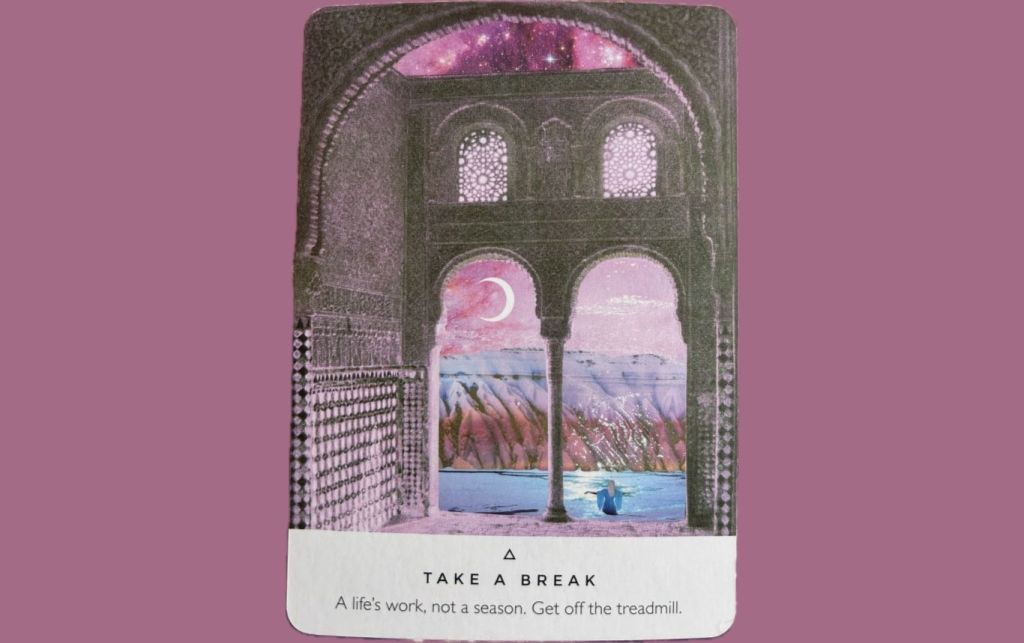
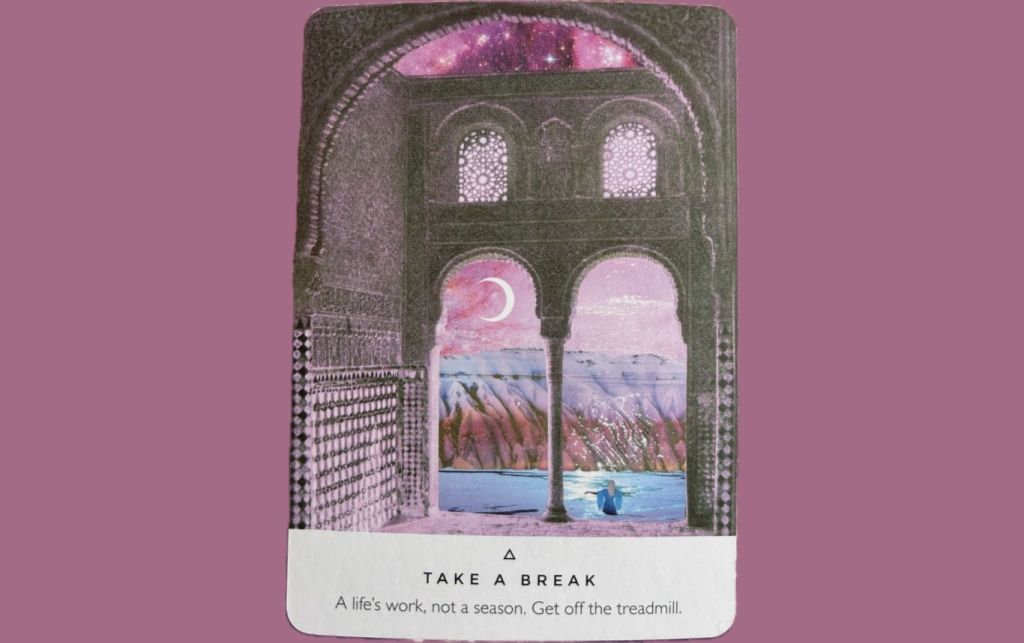
    from the World Your Light Oracle

  • Fare thee well, teacher self

    Fare thee well, teacher self

    It was one of those weeks where my mind was two steps ahead of my body. My eyelids fluttered open while the earth’s were still closed, and thoughts began rapid firing:

    What am I going to have for breakfast? What am I going to wear today? Just five more minutes. No, I’ll be late for work. Will I be the first teacher there again? Who is still sleeping while I’m holding my coffee steady running out the door? Which activities do the kids want to do? Not play-dough, someone sneezed in that yesterday. Better throw it all out. What songs do they want to sing? Gotta keep it fun, gotta keep it engaging. Otherwise they won’t listen to me. Oh, this person needs me? Be right there! You peed your pants? That’s okay, it happens to everyone. If I peed my pants, would they send me home? Probably not. I don’t even have spare clothes to change into. One more minute until lunch, and then BOOM I’m out of here!

    I collapse in the driver’s seat of my car at 3 p.m., a hollowed-out shell of the vibrant woman I was that morning. I have nothing left to give—not to my writing, not to my friends, not even to myself. If my emotional labor muscles weren’t strong before, they’re absolutely shredded now. Some days, I sit in my car in the driveway staring through through the blur of my rainy windshield, letting my gaze relax and my ears soften as if I am a rock and the world is a river that rushes around me.

    If I—a single, childless woman, with only myself to care for—feel this depleted by the end of the day, what must it be like for my colleagues who go home to their own children? Or for any mother in this society? They perform this emotional gymnastics at work, then start a second shift the moment they walk through their front door. Mothering is perhaps the ultimate thankless job in this white, capitalist, patriarchal, heteronormative culture—a 24/7 position with no benefits, no sick days, and certainly no living wage.

    This is the plight of teachers everywhere: overworked and underpaid. At my school, I am the only teacher without children of my own. Only two are single parents supporting their kids on one income, and only one of them has kids under 18-years-old. The rest have husbands who are the literal breadwinners of the family. If you assumed that all of the teachers are women, you assumed correctly, and that’s part of the problem.

    Teaching is historically considered “women’s work,” built on the assumption that all women should have a man in their life—husband, father, or equivalent—who will handle their financial needs. A woman’s job is to manage domestic duties and raise children. Well, if she has a man to take care of her finances and she was going to be with children all day anyway, why bother paying her a living wage?

    I finally put in my notice. After four years, I gave a generous six months—more than ample time for the school to organize fall class lists. One particular coworker keeps dismissing my decision with a wave of her hand. “You’re not leaving,” she states flatly, as if announcing tomorrow’s weather. “You’re not going to find anything better out there.” Her voice takes on that deprecating tone reserved for naive dreamers. “You’ll miss this too much. Even if you think you’re leaving, trust me, you’ll be back.” The desperate edge beneath her words is palpable—a plea for nothing to change, for no one to challenge the unfair standards we’ve all silently agreed to settle for.

    I recognize what’s happening beneath her words. My departure forces her to confront her own choices, her own settling. If I succeed in finding something better, what does that say about her decision to stay? It’s easier to believe that better options don’t exist than to acknowledge you’ve stopped looking for them.

    Most of my other coworkers are sad but supportive. They know teaching was never my intended career, that it fell into my lap on my journey as a writer. But it wasn’t just a side job. I gave a piece of my heart to all the children I taught that I will gladly never get back. I fell in love with the work, even though I always knew it wasn’t my destiny.

    Teaching has given me invaluable gifts—emotional intelligence, patience, creativity under pressure. But writing has always been my destiny. Now, the question is how do I merge that creative energy with my writing in a way that earns me a livable wage? I don’t want to fall into the trap of undervalued “women’s work,” nor chase the empty promises of hyper-productive “men’s work” that values output over meaning. Somewhere, there exists a third path I’ll have to pave for myself. I likely already am.

    “To realize one’s destiny is a person’s only obligation.” Paolo Cohelo, The Alchemist

    Success to me isn’t bestseller lists or literary prizes. (Although, I wouldn’t say no to that!) It’s being able to afford food on my table and a roof over my head while creating work that matters. It’s being surrounded by a loving community. That’s all I want. And if I start now, who knows where I will be in six months? I owe it to myself—and to my inner child who promised I would always be a writer—to at the very least try my hardest to become the creator I was meant to be.

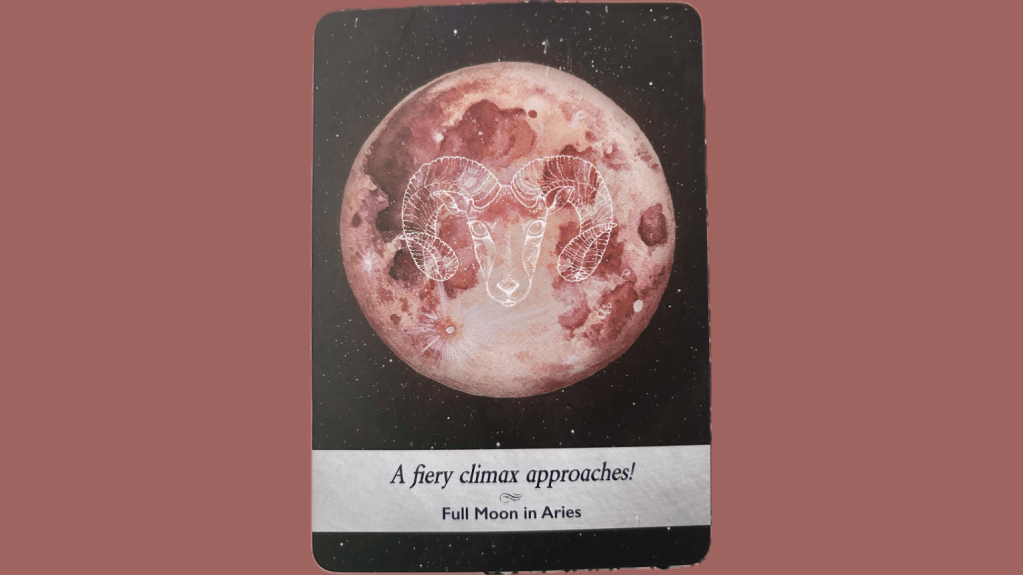
    From the Moonology Oracle Cards