Hello, loyal followers and subscribers! And by that, I mean my mom. Hi, Mom! I love you and miss you. Thanks for being my number one fan.
Anyways, apologies for the unexpected hiatus. I did not intend to take a summer vacation from writing. But trust, I have been writing. Just nothing public. I’ve been writing short stories, poetry, journal entries, shopping lists, invitation cards, emails, and cover letters.
I’ve been absorbing enough sunshine in my skin to last me all winter. I’ve been standing in my kitchen, performing the sacrificial rituals of splitting tomatoes, squishing blueberries, and weeping as I slice through onions. I’ve been floating atop canyons and mountains under the cobalt blue water, feeling the fluid stability of ancient waters holding my body as I breathe in and out. I’ve been peaking through my eyelids in the darkest hours of night to glimpse the shimmering galaxies splayed across the blackish-bluish sky. I’ve been waking up to the rhythmic tap of raindrops on my tent, unzipping the flap, and scanning the dew-covered spider silk amidst the komorebi for fairies. For it is in these dense forests, in the space between cities and wilderness, that they appear. I wonder if they are charmed or offended when we dress up as them in our flowing skirts and dresses, skin sparkling with glitter, flowers tucked in our hair, chests bare to the glaring summer sun. I’ve been laughing, crying, laying on my bed, staring at the ceiling, thinking about the precious yet precarious nature of life. All the things you do in your 20s when you live in the Pacific Northwest.
Though I haven’t put my creative works out to the public for the summer, make no mistake, I have been creative. One of my biggest creative projects was moving. I moved into a big house with my five closest friends. We’ve seen each other through all phases and stages of life. From childhood sleepovers, awkward preteen phases, and high school drama (we were theater geeks), to navigating the salty seas of young adulthood. These friendships have lasted longer than any romantic relationship, any job, any lease we’ve been through. Now, we share a home together, and it has been one of the grandest creative projects of my life. How do we puzzle piece all our furniture together? Where does our art go? What goes in the dishwasher? Which kitchen drawer should have the silverware? When do we water the garden? Whose laundry day is it?
We’ve lived here for two months, and we’re just getting settled in. The stack of unpacked boxes keeps moving from room to room, unsure where the final home of its contents will end up. And just because I didn’t feel like moving was enough chaos, I quit my job. I left my secure and stable position as a teacher– a role I grew to thrive in and adore– to start my career as a professional writer. It was nerve wracking and anxiety inducing, and still is. I pushed out a nervous laugh every time someone asked where I was going next. “I don’t know yet! Why? Are you hiring?” I’d tease. They usually smiled and said, “Good luck!” with undertones that said, “You’re gonna need it.”
So, here I am. Floating through space. Existing in this in-between time where I don’t know how it’s all going to work out, so I have to cling to this liferaft of blind faith that it’s already working out. Having a job I was good at, a title I could claim, was all false reassurance. It gave me a false sense of security that I knew what I was doing with my life. As if my existence could be simplified to a job title. But isn’t it nice to have an answer when someone asks what you do? Isn’t it soothing to have people smile and nod when you tell them what your job is? So they can better understand you and, by proxy, you can better understand yourself?
To quote Tibetan Buddhist Chögyam Trungpa, “The bad news is you’re falling… The good news is, there’s no ground.”
Regardless of where I live, who my friends are, what my job is, I am always me. These are just decorations to the essence of who I really am. And who I really am is indescribable. Once you think you know, it changes again. I’m not rushing to know, to find out what’s next. I’m taking long walks. I’m falling asleep early and waking up late. I’m reading a thick book very slowly. I’m wandering the farmer’s market. I’m watching the clouds go by. Sooner than later, things will move fast again, and I’ll long for the time when I could flow through my days at my own pace. So I will be here for now as long as I can.
When I was a kid, I used to eat lip balm. It was pink and lollipop flavored. It smelled like strawberries and coated my tongue with sticky sweetness when I pushed it through my lips. It even had pictures of candy on the wrapper. I don’t know what genius marketed this to kids and didn’t expect them to eat it. But every time I took a bite, it tasted horrible. It made my lips pucker and my throat sore. But I’d smell it again and go in for another taste. Still horrible. I kept going back for more, thinking maybe the next time would be different.
This was a precursor to what relationships would be like for me. So enticing, the promise of sweetness written all over them. But disappointing every time. I wanted so badly for them to taste good that I kept coming back for more, thinking maybe the next time would be different.
But they weren’t.
Anyone who has known me long enough is aware that I am a lover, a hopeless romantic. And therein lies the problem. I love so deeply and so easily that I give the most tender pieces of my heart away like free samples at the grocery store. I’m notorious for being too forgiving, too understanding, too enamored by amour. That’s the thing about rose-colored glasses; they make all the red flags look like normal flags.
Walking through the graveyard of miserable dates, failed relationships, and awkward situationships, they all have one thing in common: me. So, I decided to remove myself for a while. How did I end up here? How did so many of us end up here? The answer, I concluded, was trauma.
Humans are hardwired for connection. We are not isolated creatures. We survive because of our community, our family, our relationships. Yet, we’re sold this fantasy that we don’t need anyone. Our basic instincts are stripped from our core, packaged, and resold to us under a hyper-individualistic model of relationships. Western culture perpetuates this idea that you alone are a unique and special individual, and everyone else is either a material asset or hindrance to your ultimate success. This doesn’t leave much room for the emotional complexity, empathy, or the spiritual nature of being human.
We didn’t choose to be born into a culture that doesn’t know how to love. (If you did, please message me so I can pick your brain about reincarnation.) Most of us are operating from the model that was laid out before us. We come from families who come from families of empty promises, instability, rejection, conditional love, abuse disguised as affection, and cruelty masked as care. We are starved for real love and genuine connection, unaware that our soul’s deepest desires are sleeping in the cavern of our chests. Because they don’t teach you that in school. They don’t teach you how to love yourself and see the world and every being in it as an extension of the divine source that exists across infinite time and space.
To put it in simple terms, we don’t know any better. We don’t know how to stop seeking approval from others, how to stop chasing the dopamine rush, how to be okay without external validation or being the Chosen One. We don’t know how to reject this model of false love and exchange it for the pure and free love that is eternally available yet seemingly rare. After a lifetime of disappointment, confusion, regret, and isolation, we long for someone to change the narrative. We fantasize that someone will come along who sees us and loves us exactly as we are. And the love from this magical person will heal all the hurt we’ve ever felt.
This was the fantasy I had. I so desperately wanted someone to say to me, “I love you, I choose you, and you never have to be alone again.” Maybe I took the Golden Rule of treating others the way you want to be treated too literally. Because I said these words to anyone who caught my fancy. I was blissfully unaware of what true love was and naively confident I knew what it looked like. If I said all the right words and acted the right way at the right time, couldn’t I manufacture intimacy? With the proper formula and enough willpower, couldn’t love grow in even the most hostile environments?
Turns out it doesn’t work that way.
I blame online dating for strangling the modern expectation of romance and courtship. Granted it is a symptom, not the cause. The sterilization of online dating fits perfectly into a culture where relationships are treated as transactions. It makes total sense for my generation, being the first to grow up with the internet. We’re the first group of kids who didn’t have to go to school if we didn’t want to. Anywhere could be a classroom with a computer and wi-fi. It’s normal for us to have close friends halfway across the world whom we’ve never met in person but frequently play video games with. Social media became the new mall, and the actual mall became the set for a zombie apocalypse movie.
As a result, my generation is terrible at meeting people organically. Making friends is a struggle, let alone dating. It’s much easier to scan through someone’s pictures, know their zodiac sign, whether they’re a cat or dog person, whether they want kids, how tall they are, and their favorite hobbies. Everything you’d want to know on a first date is conveniently laid out for you in a 30-second snapshot. You don’t even have to go through the humiliation of rejecting them or expressing your interest face-to-face. If you do meet in person, you already have a preconceived notion of what to expect based on their profile. And the majority of the time, in my experience, the reality is vastly different from the expectation.
I know I sound like a hater of online dating, and I am. But that doesn’t mean I haven’t used it. Unfortunately, it’s the new standard. The best conversations I’ve had with people on dating sites are about how much we despise dating sites. I met one of my more serious relationships through online dating. We used to fantasize that we met on the stairs at a house party hosted by mutual friends when the music was too loud and we both needed to get away from the crowd. We laughed and sighed, letting the disappointing reality of our online meet-cute hover with a silent tension.
This same person admitted to me that they curated their profile to attract someone like me. They were in sales—which was the first red flag—and said that dating is a lot like making a sale. You have to put the best version of yourself forward and tailor that version of yourself to be appealing to the person you are pursuing. I was a little offended when they said this. Was I nothing more than a customer? Had I been baited into finding this person attractive? The answer was yes, but wasn’t that what everyone was doing?
It wasn’t until we were in a committed relationship that they actually showed me who they were. They were waiting for me to stay before they took off the mask. Because now that I was committed, even if it was to a half-true version of who they were, I couldn’t revoke my premature declarations of love without being an asshole. Had I been a little more mature and self-assured, I would have had the courage to have that awkward conversation. I would have said, “It was lovely getting to know you, but we have incompatible life goals and values that won’t work out long term. Thank you for all the good times, but I must be going now.”
But I stayed much longer than I should have. I tried to say the right words and act the right way at the right time to resemble love. I wanted it to work so desperately that I lied to myself and thereby my partner far longer than I should have. And when I ended things, it was sudden. I was over that relationship too long before it actually ended.
And there were the other dates I went on. So sterile. So full of expectation. So transactional. No one took the time to get to know me beyond how I could fulfill their hedonistic desires. No one courted me or put any effort into the romance of dating. No one wore their heart on their sleeve like I did; they kept it tucked tight under their shirt. I was starting to think maybe I should do the same.
I was losing faith in the art of dating. Not that I was trying, really. I had tried too hard for too long to no avail. So, I was experimenting by actively not trying.
And isn’t it always when you aren’t looking for something that the thing you weren’t looking for comes waltzing into your life?
In my case, it came dancing under the disco ball, wearing a mesh long-sleeve layered under a tie-dye shirt, asking for my number. I pretended not to anxiously await a text when I got home, the modern equivalent of checking your answering machine.
I was flattered and a little dumbfounded. No one asks for your number anymore. No one approaches a stranger they find attractive, introduces themselves, and exchanges numbers. That’s only something that happens in the movies. The internet has completely squashed any possibility of organic dating. Or so I thought.
When you meet someone in person, you don’t get to see their profile. You have to study their face, catch the color of their eyes and the way they style their hair. Notice the way they dress, the way they carry themself, how they interact with their friends. Make eye contact, but not for too long. The trick is to do all this without them realizing it. It’s okay if they suspect something. You want them to know you’re interested. But be sly about it. These are the building blocks of flirting.
After this is established, introduce yourself. Offer them a compliment, but only if it’s sincere. If there’s something admirable that stands out to you, tell them. The more specific, the better. Avoid stock phrases like, “You’re so hot/beautiful/sexy/etc.” What is unique about this person that makes them attractive? No need to force a compliment if something doesn’t feel natural. But there must be something about this person that you find appealing, so why not tell them?
Don’t kiss them. Don’t hold them or touch them any differently than you would a friend. Don’t sleep with them. Exchange phone numbers or an equivalent communication medium. Avoid sharing social media if you can. This keeps the mystique alive. Arrange a time and place to get to know each other one-on-one. They might say yes or no. Either way, it’s good news. If they say no, the work for you is over. You can go back to living your peaceful life just the way it was before. If they say yes, you have the exciting opportunity to get to know someone new.
When you arrive at a time and place to get to know each other one-on-one, ask questions. What are their likes, dislikes, hopes, fears, goals, passions, interests? What can you relate to or bond over? Whether or not you have things in common, it’s good news. If you don’t have much in common, you have the privilege of learning a different perspective. If you have plenty in common, it’s even more serendipitous that you and this former stranger have a seemingly endless list of things to talk about.
If things go well and you both enjoy yourselves, keep doing this. Keep going on dates, spending time together, talking, and getting to know each other. Space it out as it feels right. There’s no need to rush. All you need to do right now is keep living your life. Keep living your life exactly as you have been, with the addition of seeing this special person from time to time. The rest will sort itself out.
But you can’t jump straight to the end. You can’t make a flower bloom before its season. The harder you hold on, the more it slips away. And trust me, I know.
People change all the time, some faster than others. When you commit to a relationship with someone, the person you’re committing to now won’t be the same in a year, ten years, or twenty. And you won’t be the same either. So never stop dating. Never stop getting to know each other. Never stop flirting and asking each other questions. Never stop bringing surprise gifts and planning activities together. Never stop hanging on their every word and gazing into each other’s eyes over candlelight. What people most often don’t realize about the art of dating is that it doesn’t end after the beginning of the relationship. It shouldn’t, at least.
Dating is an art, a dance. Sometimes it feels like an ancient language that we all know bits and pieces of but struggle to converse in. But romance is alive and well, my friends. The art of dating is a practice. It’s just up to you to breathe life into it.
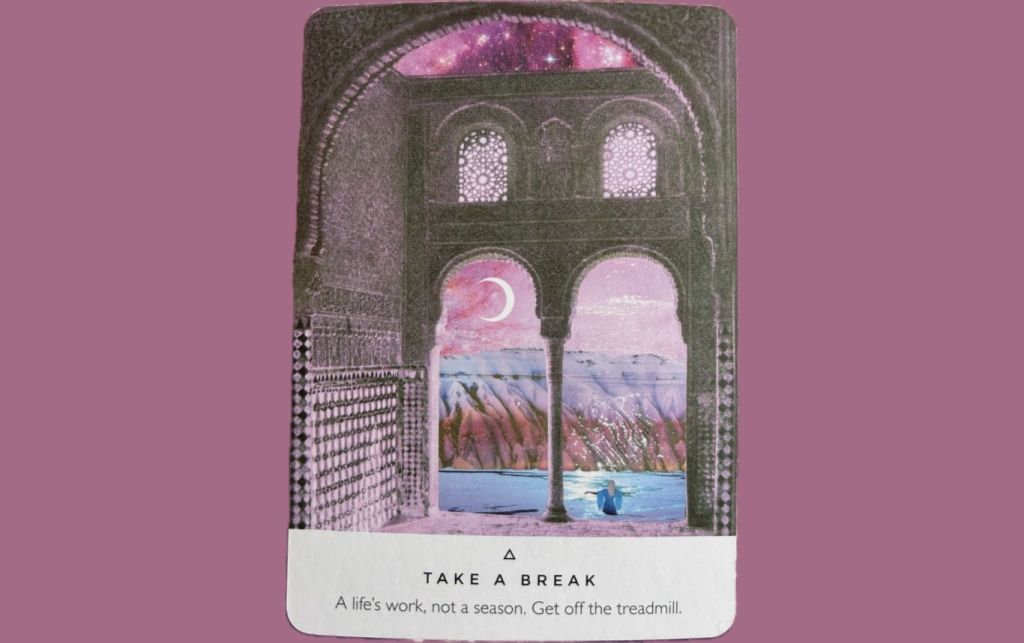
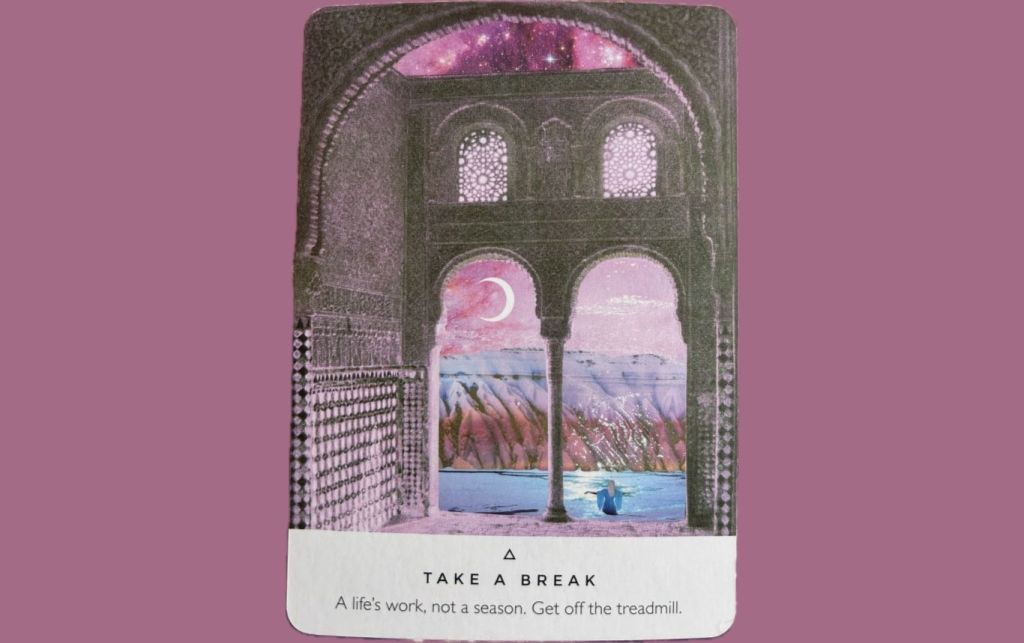
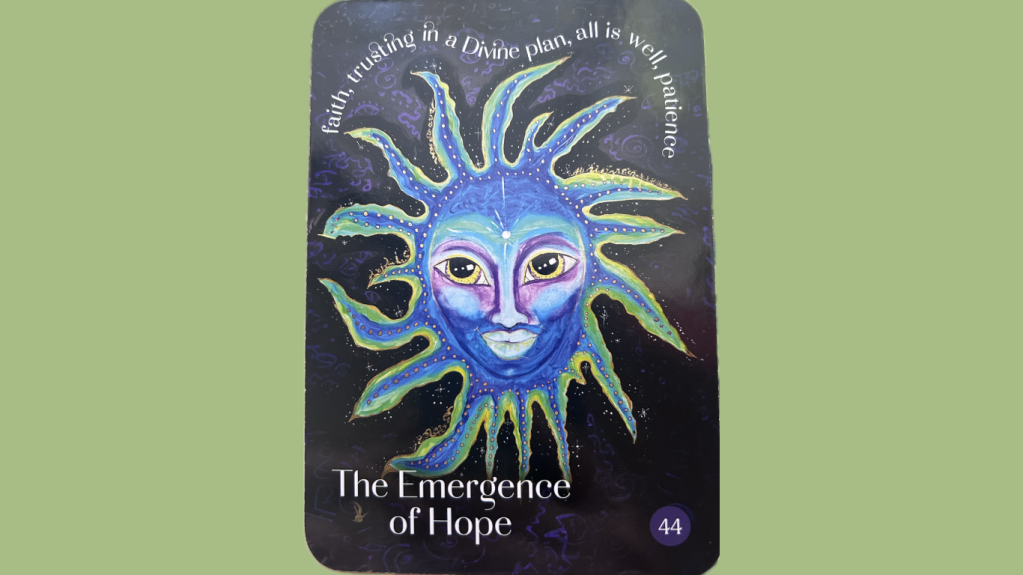
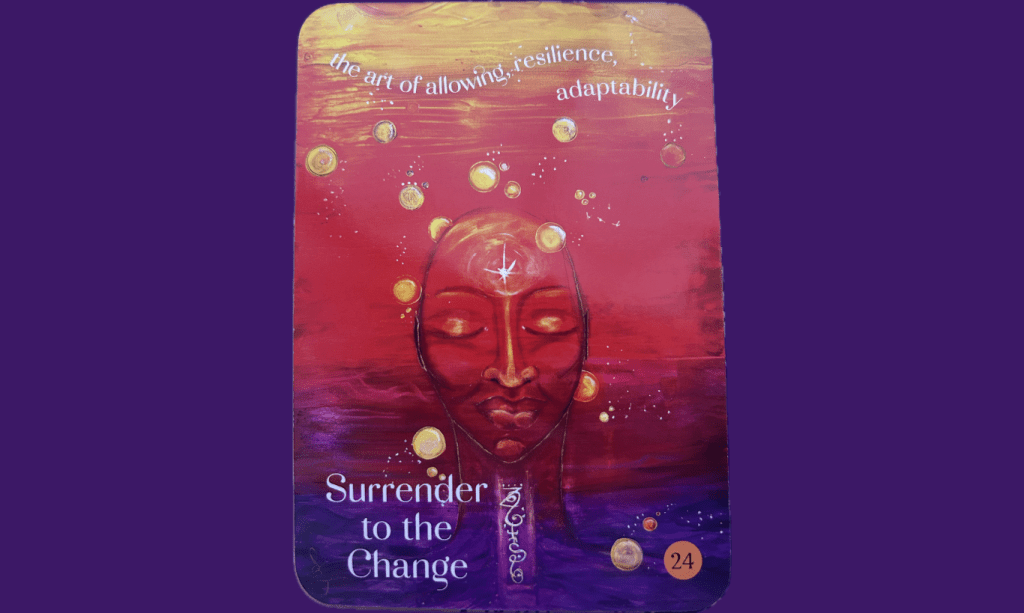
From the Guides of the Hidden Realms Oracle
My sincerest apologies in advance to anyone who doesn’t want me to write about our personal relationships. I do my best to keep all characters in my non-fiction writing anonymous. If you were worried about having your personal life exposed in the most poetic way, you shouldn’t have gotten involved with a writer.
The ground never stops moving here. The earth that was supposed to be so stable and hold us for all our lives never stops moving here. I plant my feet, the sand consumes them. I pick them up, it pushes back and forth against me. The reflection of the clouds is perfectly clear, until it isn’t, and the swirling brown surf washes it all away. Like someone threw a bucket of water on a wet painting. Nothing could be closer to walking on the sky.
Time is distorted here. I haven’t walked for more than a song or two, and yet my friends are smaller than ants on the picnic blanket I left perched on the sand dunes. Sound travels different here, too. There’s people all around, but their voices and footsteps are drowned out by the roaring of waves. Like a herd of wild horses thundering over the hillside, only to collapse and dissipate into sea foam at the crest.
I walk in the liminal space where the waters of earth’s womb cleanse her human shores. Nothing stays the same here, and nothing ever should. Nothing stays the same anywhere if you look long enough. The unending change is just more visible on the coast. The ocean bellows an ancient hymn of change.
I left my job at the end of last week. It was planned, expected, a date on the calendar that approached closer and closer with every rise and fall of the moon. It’s been four years of dedicated service, of being the first to arrive and the last to leave, of rapport with children not because I had to but because I couldn’t contain my heart from loving them with all that I was. After four years of growing in one spot, I felt my roots get crowded around the edges of my container. They longed to dig deeper, reach wider, and I knew I would grow in ways I never thought I could if I gave myself the opportunity to. So, I left. I left with my last paycheck and a binder full of my favorite children’s illustrations. I didn’t even have a plan or a summer bonus to fall back on.
Growing up, things changed a lot for me. Different houses, different families, different friends. My life feels like a back-to-back sequences of beginnings and endings with little time to adjust to stability in between. My inherent optimism came in handy here. No matter how uncomfortable or scary the change was, I greeted it with a smile and welcomed it into my life. Even when I hated it. Even when I wished things wouldn’t change. Even when I wished things would change in a different way.
Maybe this is why I am so drawn to the beach. It is the birthplace of change. It affirms what I already knew to be true: change is the only constant. It is powerful and terrifying and unstoppable. But it is glorious. And it just Is. We don’t have to do anything for it to Be. Just witness it.
And, so, I am reveling in this liminal space.
I’m opening the windows and turning up the song.
I’m not getting enough sleep and I’m sleeping too long.
I’m singing down the sidewalk and skipping out the door.
I’m kissing after midnight and twirling on the dance floor.
I’m drinking too much coffee and screaming at the sky.
I’m laughing with the Great Unknown until she makes me cry.
Because every now and then I kick the living shit out of me.
But all ‘90s pop-punk references aside. . .
It’s true.
Can you relate?
Don’t bother putting me down. No one could ever measure up to the frequency and accuracy with which I put myself down. No one knows my deepest insecurities, fears, weakest points, the things to say that hurt the tenderest parts of my soul, better than I do. So, if someone ever rubs you the wrong way or hurts your feelings and you feel the urge to explode in a rage of vengeance cleverly disguised as justice, remember that no one insights vengeance on them better than themselves.
But I am practicing being kinder to myself, using sweeter words, more forgiving words. Because I really do love myself. No one could ever understand the depths of my dreams or know which wishes I repeat to the first star in the twilight sky. They don’t know that I know I’m not wishing on a star at all, but a planet that glows brighter than the other constellations. No one knows the little things in each day that remind me there is magic in the world and we are all very much a part of it. the things to say that hurt the tenderest parts of my soul, better than I do. No one knows the things to say that resonate against the tenderest parts of my heart better than I do. Because I am so loveable, and there is no one better to remind us of that than ourselves. So, if you find yourself in a downward spiral of self-blame and self-doubt, remember that no one can remind you how loveable and forgivable you are better than yourself.
I don’t think anyone gets in our way more than ourselves. We live in a societal system that feeds off of our insecurities. Financial insecurity, job insecurity, education insecurity, food insecurity, housing insecurity, health insecurity, body insecurity, social insecurity, love insecurity. Need I go on? Many of the great writers on social justice and politics describe the strategic placement of these insecurities within a culture to create a society of people who are easily controlled. One of my favorite feminist poems puts it better than I ever could.
The Myth of Female Inferiority
The best slave
does not need to be beaten.
She beats herself.
Not with a leather whip,
or with sticks or twigs,
not with a blackjack
or a billy club,
but with the fine whip
of her own tongue
& the subtle beating
of her mind against her mind.
For who can hate her half so well
as she hates herself?
and who can match the finesse
of her self-abuse?
Years of training
are required for this.
Erica Jong, “Alcestis on the Poetry Circuit”
So, it is my belief that one of the greatest acts of resistance that we have at our disposal at all times is self-love. The greatest act of rebellion is to live authentically as yourself, whether you’re alone or in a room of strangers. Give yourself the permission to live unapologetically, courageously, free.
And me-oh-my is that one of the hardest things to do! The fear of rejection is not an irrational one. We need other people to survive. We need our community to support us. We need others to help love and care for us, and we need to love and care for others, too. Humans are not solitary creatures, no matter what hyper-individualism propaganda we may receive. The fear of being rejected by those we admire truly taps into our basic survival instincts. Our lizard brains associate rejection with isolation and isolation equates to death. Without other humans, we would not survive. However, this becomes much more complex in the 21st Century when our basic survival instincts are activated when someone doesn’t respond to our text.
I have decided to take the courageous leap to be myself, as authentic as I can be, in every social interaction I have. Friends, strangers, work, family. If I’m happy, I’ll express it. If I’m sad, I won’t hide it. If I’m scared, jealous, insecure, excited, anxious, uncertain, melancholy, I’ll give them a seat at my table. I know these feelings are just visitors passing through.
For most of my life, I have used my relationships to other people as a way to define myself and my self-worth. I let other people decide if I was a good friend, a good daughter, a good sister, a good listener, a good leader, a good worker. They decided if I was beautiful, if I was fun, if I was smart, if I was kind, if I was worthy of love and acceptance. And when I let people down–because inevitably we all let somebody down once in a while–I felt distraught. I let it redefine my self-worth. I had to rethink everything I thought I knew about myself. I punished myself with “the fine whip of [my] own tongue.” But around the age of 20, when I read Terry Cole-Whittaker’s book What You Think Of Me Is None Of My Business, I realized how much power I was giving other people over my own life. And I was the only one facing the consequences. I am the only one living my life, having my unique human experience, piloting this animated flesh suit on this rock hurling around a ball of incandescent gas in space. The only person’s approval that really matters is our own.
This is not to say you should go around hurting others or your environment as long as you have your own approval. A basic code of morals is also essential to survive in this global human village. Like I said, we could not survive without each other. We could not survive without the vast and complex ecosystem that provides us with air to breathe, food to eat, and land to live on. So, do what you will, but do no harm.
No matter what choices you make, rejection is inevitable and often unpredictable. Rejection is not an easy feeling to sit with. Nobody looks forward to this inevitable pain. Most of us will go to extreme lengths to avoid rejection by building walls around our fragile human hearts. But we could never know the deepest expression of love without knowing its antithesis: loss. We all want to be loved and accepted for just who we are. But we can’t please everybody all the time. And oftentimes, there will be people in your life who are simply on a different wavelength than you. And that’s okay! It’s nothing personal. No one is worse or better than anyone. It’s just different, and variety is the beauty of the human experience. People are going to reject you, you are going to reject people. People will let you down, you will let people down. And that’s okay. It’s not the most fun and easy feeling to have, but despite what our lizard brain is telling us, someone not texting us back in the timeframe we want them to is not a life or death scenario.
At this point in my life journey, I am practicing walking the middle path. I am balancing security within myself and the possibility of new connections. I am building a home within myself while leaving the door unlocked for people to come and go. And make no mistake, it is extremely anxiety inducing. To let other people in on the parts of me I’ve often hidden out of shame for decades? Horrifying. To face the daunting abyss of inevitable pain and rejection? Terrifying. But I am learning to walk through hell with an open heart.
It was one of those weeks where my mind was two steps ahead of my body. My eyelids fluttered open while the earth’s were still closed, and thoughts began rapid firing:
What am I going to have for breakfast? What am I going to wear today? Just five more minutes. No, I’ll be late for work. Will I be the first teacher there again? Who is still sleeping while I’m holding my coffee steady running out the door? Which activities do the kids want to do? Not play-dough, someone sneezed in that yesterday. Better throw it all out. What songs do they want to sing? Gotta keep it fun, gotta keep it engaging. Otherwise they won’t listen to me. Oh, this person needs me? Be right there! You peed your pants? That’s okay, it happens to everyone. If I peed my pants, would they send me home? Probably not. I don’t even have spare clothes to change into. One more minute until lunch, and then BOOM I’m out of here!
I collapse in the driver’s seat of my car at 3 p.m., a hollowed-out shell of the vibrant woman I was that morning. I have nothing left to give—not to my writing, not to my friends, not even to myself. If my emotional labor muscles weren’t strong before, they’re absolutely shredded now. Some days, I sit in my car in the driveway staring through through the blur of my rainy windshield, letting my gaze relax and my ears soften as if I am a rock and the world is a river that rushes around me.
If I—a single, childless woman, with only myself to care for—feel this depleted by the end of the day, what must it be like for my colleagues who go home to their own children? Or for any mother in this society? They perform this emotional gymnastics at work, then start a second shift the moment they walk through their front door. Mothering is perhaps the ultimate thankless job in this white, capitalist, patriarchal, heteronormative culture—a 24/7 position with no benefits, no sick days, and certainly no living wage.
This is the plight of teachers everywhere: overworked and underpaid. At my school, I am the only teacher without children of my own. Only two are single parents supporting their kids on one income, and only one of them has kids under 18-years-old. The rest have husbands who are the literal breadwinners of the family. If you assumed that all of the teachers are women, you assumed correctly, and that’s part of the problem.
Teaching is historically considered “women’s work,” built on the assumption that all women should have a man in their life—husband, father, or equivalent—who will handle their financial needs. A woman’s job is to manage domestic duties and raise children. Well, if she has a man to take care of her finances and she was going to be with children all day anyway, why bother paying her a living wage?
I finally put in my notice. After four years, I gave a generous six months—more than ample time for the school to organize fall class lists. One particular coworker keeps dismissing my decision with a wave of her hand. “You’re not leaving,” she states flatly, as if announcing tomorrow’s weather. “You’re not going to find anything better out there.” Her voice takes on that deprecating tone reserved for naive dreamers. “You’ll miss this too much. Even if you think you’re leaving, trust me, you’ll be back.” The desperate edge beneath her words is palpable—a plea for nothing to change, for no one to challenge the unfair standards we’ve all silently agreed to settle for.
I recognize what’s happening beneath her words. My departure forces her to confront her own choices, her own settling. If I succeed in finding something better, what does that say about her decision to stay? It’s easier to believe that better options don’t exist than to acknowledge you’ve stopped looking for them.
Most of my other coworkers are sad but supportive. They know teaching was never my intended career, that it fell into my lap on my journey as a writer. But it wasn’t just a side job. I gave a piece of my heart to all the children I taught that I will gladly never get back. I fell in love with the work, even though I always knew it wasn’t my destiny.
Teaching has given me invaluable gifts—emotional intelligence, patience, creativity under pressure. But writing has always been my destiny. Now, the question is how do I merge that creative energy with my writing in a way that earns me a livable wage? I don’t want to fall into the trap of undervalued “women’s work,” nor chase the empty promises of hyper-productive “men’s work” that values output over meaning. Somewhere, there exists a third path I’ll have to pave for myself. I likely already am.
“To realize one’s destiny is a person’s only obligation.” Paolo Cohelo, The Alchemist
Success to me isn’t bestseller lists or literary prizes. (Although, I wouldn’t say no to that!) It’s being able to afford food on my table and a roof over my head while creating work that matters. It’s being surrounded by a loving community. That’s all I want. And if I start now, who knows where I will be in six months? I owe it to myself—and to my inner child who promised I would always be a writer—to at the very least try my hardest to become the creator I was meant to be.
We’re giving away FREE– that’s right, FREE– excuses! Excuses are simple, cheap, and fit any occasion. Stuck in a romantic relationship but don’t know how to break it off? Try excuses. Have a friend that you want to distance yourself from? Try excuses. If you hear phrases on this list from someone in your life, they could be using excuses.
Read our list of free excuses, and take the ones that suit your needs. Share them with friends, family, coworkers, even strangers! Remember, everyone’s got excuses, but no one wants to hear them. That’s why we made our excuses realistic and reasonable. Even if someone suspects you’re using excuses, they won’t have any reason to question you.
Excuses Catalog: Your Guide to Emotional Avoidance
Disclaimer: Excuses are not a substitute for honest communication. Use at your own risk.
When You Don’t Want to Make Time:
Work has been so busy this week.
School is so overwhelming. It demands your time even when you’re not in class.
You’re exhausted and just need some alone time to recharge.
Your car broke down, and you don’t have money to fix it.
You don’t have a car and don’t intend on getting one because we live in a car-dependent dystopia and driving gives you anxiety.
You never saw their message.
You never respond to anyone’s message.
You have a standing obligation on [insert date/time they want to see you].
When You Want to Avoid Emotional Intimacy:
You’re just shy and don’t know the right words to say.
You’re intimidated by their confidence and success.
You struggle with your own self-worth, so expressing affection doesn’t come naturally to you.
You were raised to be unemotional and avoidant, a victim of a culture based on emotional separation like everyone else.
Talk is cheap, actions speak louder. They should know how you feel without saying anything at all.
When You Don’t Want Physical Intimacy:
You’re still learning about each other’s bodies.
You don’t want to ruin the “vibe” by asking awkward questions.
They should know how you want to be touched based on your body language.
People rely on physical touch too much because they don’t know how to express affection any other way.
When You Want to Evade Gifts:
We live in such a materialistic world. Why place this emphasis on giving gifts for Christmas? Or Valentine’s day? Or birthdays?
Gifts often come with strings attached. Why give gifts out of obligation if they’re just going to hold it over your head someday?
You don’t have enough money to get them something they’d actually like.
A dollar saved is a dollar earned. Better not to spend it on frivolous gifts and invest in your future finances.
When You Want to Avoid Personal Favors:
How would you know what they want if they don’t ask for it? You’re not a mind reader.
You’re totally independent, and they should be, too.
They probably prefer doing things for themself.
You don’t want to make them insecure about all the things they’re not doing for you.
They don’t do anything for you, so why should you do anything for them?
WARNING: If someone is consistently using these excuses, or similar phrases, it’s time to exit the relationship.
Public Service Announcement
Hi. I’m Hannah Baker, serial monogamist and chronic lingerer in relationships. I– like you and many others– make a list of why my romantic interest is the right one for me while ignoring the glaringly obvious list of why they’re not. But, each partner I’ve been with has generously given me a list of excuses for why they cannot meet my needs.
And I’ll tell you what: it worked.
I’m compiling all their lists together so that you, too, can use these free excuses the next time you’re in a relationship where you can’t meet someone’s needs. If you hear any of these excuses from someone, allow me to escort you out of this relationship.
I used to be the person who bottled everything up. I took all my guilt, all my anger, all my shame, and stuffed it way down into the pit of my stomach where it sat like a pile of kerosene-soaked towels. Like a room filling up with carbon dioxide: invisible until you light a match.
When that moment came that I couldn’t take it anymore, it seeped out of every pore of my skin, unstoppable and toxic. When they asked, “What’s wrong, where is this coming from, how can we help?” I had no idea what to say. I couldn’t remember where all these feelings came from. Because if they were treated as unimportant in the moment, then I might as well forget about them forever. But the body doesn’t forget. The trauma was etched in my neural pathways like ancient hieroglyphs that I’m now left to decipher on my own.
Eventually, I decided not to be that person who bottles things up anymore. I decided to let it all out as soon as I felt it, practice speaking my mind. It was—and still is—one of the scariest, most uncomfortable things I do. Old habits die hard, as they say. Even when I thought I was speaking my mind, there was an abyssal crevice in my body hidden even from myself where my most shameful feelings festered. I lied to myself about how I felt, because if you lie to yourself, you can convince anyone of anything. And if I don’t feel these ugly feelings, I can make myself more palatable for everyone else. And if I make myself more palatable for everyone else, then they will love me, right? And if they love me, they will never leave me… right?
One of the best quotes from The Perks of Being a Wallflower (2012), which was one of many books that inspired me to be a writer.
It is true that we love others the way we want to be loved. We know exactly how we want to be treated, so we show others how to treat us by giving them the love we so desperately crave. But what if that’s not how they want to be loved? What if that’s not how they want to love you?
“Do not expect to receive the love from someone else you do not give yourself.” – bell hooks, All About Love: New Visions
I don’t believe that we need to be fully healed in order to be loved. Healing is a journey, not a destination. It is a never-ending process, and just when you think you have it all together, something comes along and knocks you off course. Suddenly, you’re right back where you started decades ago: alone and scared in your childhood bedroom, crying into your pillow, waiting for morning to come so you can forget all about it.
But if there’s one thing I’ve learned, it’s that suppressing your truth doesn’t make the darkness disappear. It’s as useless as trying to hold back the tide with your bare hands—it slips through your fingers, leaving you exhausted and still sopping wet. Maybe on the surface, everything looks calm. Maybe you’ve convinced everyone, even yourself, that you’re keeping it together. But beneath that manufactured peace, there’s an undertow pulling you deeper, wearing you down until you can barely recognize your own reflection in those troubled waters.
Pain and suffering are inevitable. This should not come as a surprise. It is one of the core Buddhist teachings I learned that offered me peace at a time when I had none. Rarely is pain and suffering desirable, but it is one of the great uncontrollable factors that comes with the human condition. Rather than running from it, I’m practicing confronting it. I’m not saying we should fight back at everyone who hurts us or seek vengeance on our wrongdoers; that doesn’t solve anything either. Instead, I’m fighting every instinct in my being to stand my ground, look pain in the eye, and speak my truth.
There’s profound power in learning to say no—even when your voice shakes, even when it means disappointing someone you love, even when it feels like your whole world might crack open from the weight of a two-letter word. Because sometimes that crack is exactly what we need: a fissure in our air-tight walls that lets the light in.
By bottling up the emotions that you’d rather not feel, you’re not only hurting yourself by internalizing the pains—you’re hurting others by denying them the sacred opportunity to know the truest you. For what makes you more than a puddle on the floor if not for the boundaries that contain you? If there’s anything we should teach our (inner) children, it’s that everyone is responsible for their own feelings. Including you. Including me.
Pain will always find its way to the surface. Like shells tumbling in the tides at the bottom of the sea. Despite our best efforts to contain it, redirect it, or pretend it isn’t there, eventually, it will make itself known. Real courage isn’t in maintaining perfect composure or in releasing explosive emotions, but in allowing each experience to ebb and flow. And maybe the greatest gift we can give ourselves is permission to feel it all—the hurt and the healing—knowing that each wave wears down our carefully constructed facade, exposing our truest selves.

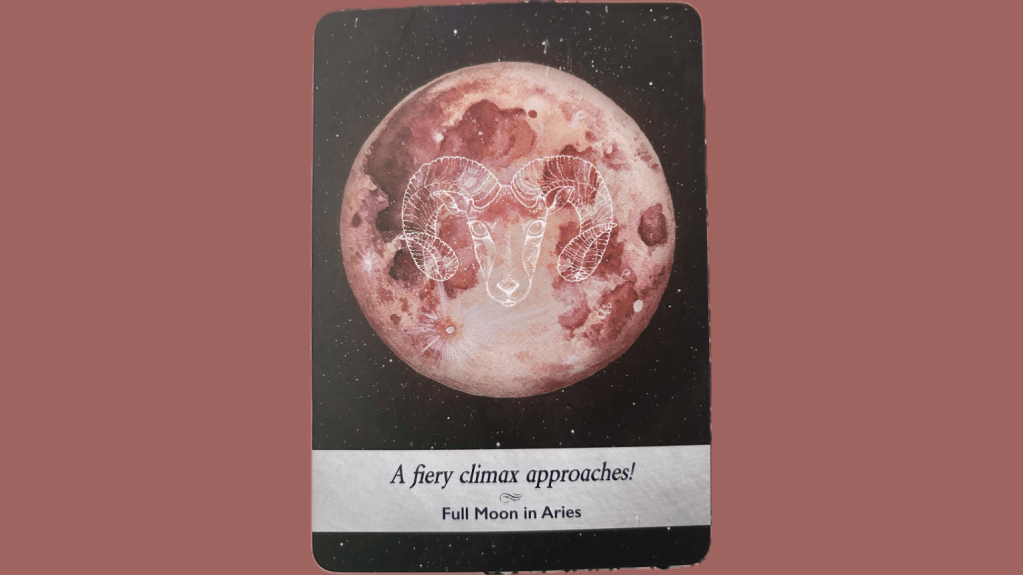

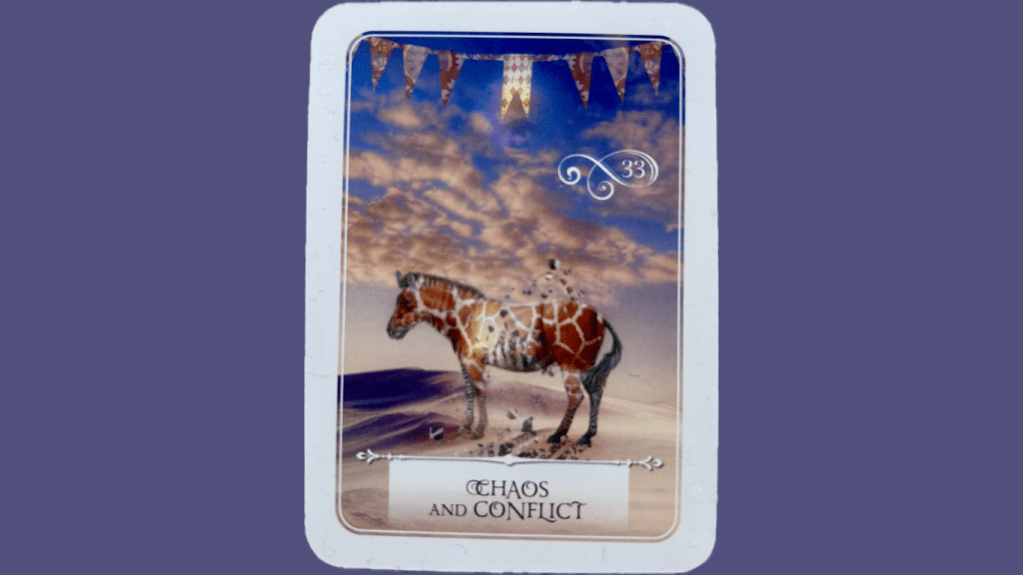

 The Writer's Oracle