Hello, loyal followers and subscribers! And by that, I mean my mom. Hi, Mom! I love you and miss you. Thanks for being my number one fan.
Anyways, apologies for the unexpected hiatus. I did not intend to take a summer vacation from writing. But trust, I have been writing. Just nothing public. I’ve been writing short stories, poetry, journal entries, shopping lists, invitation cards, emails, and cover letters.
I’ve been absorbing enough sunshine in my skin to last me all winter. I’ve been standing in my kitchen, performing the sacrificial rituals of splitting tomatoes, squishing blueberries, and weeping as I slice through onions. I’ve been floating atop canyons and mountains under the cobalt blue water, feeling the fluid stability of ancient waters holding my body as I breathe in and out. I’ve been peaking through my eyelids in the darkest hours of night to glimpse the shimmering galaxies splayed across the blackish-bluish sky. I’ve been waking up to the rhythmic tap of raindrops on my tent, unzipping the flap, and scanning the dew-covered spider silk amidst the komorebi for fairies. For it is in these dense forests, in the space between cities and wilderness, that they appear. I wonder if they are charmed or offended when we dress up as them in our flowing skirts and dresses, skin sparkling with glitter, flowers tucked in our hair, chests bare to the glaring summer sun. I’ve been laughing, crying, laying on my bed, staring at the ceiling, thinking about the precious yet precarious nature of life. All the things you do in your 20s when you live in the Pacific Northwest.
Though I haven’t put my creative works out to the public for the summer, make no mistake, I have been creative. One of my biggest creative projects was moving. I moved into a big house with my five closest friends. We’ve seen each other through all phases and stages of life. From childhood sleepovers, awkward preteen phases, and high school drama (we were theater geeks), to navigating the salty seas of young adulthood. These friendships have lasted longer than any romantic relationship, any job, any lease we’ve been through. Now, we share a home together, and it has been one of the grandest creative projects of my life. How do we puzzle piece all our furniture together? Where does our art go? What goes in the dishwasher? Which kitchen drawer should have the silverware? When do we water the garden? Whose laundry day is it?
We’ve lived here for two months, and we’re just getting settled in. The stack of unpacked boxes keeps moving from room to room, unsure where the final home of its contents will end up. And just because I didn’t feel like moving was enough chaos, I quit my job. I left my secure and stable position as a teacher– a role I grew to thrive in and adore– to start my career as a professional writer. It was nerve wracking and anxiety inducing, and still is. I pushed out a nervous laugh every time someone asked where I was going next. “I don’t know yet! Why? Are you hiring?” I’d tease. They usually smiled and said, “Good luck!” with undertones that said, “You’re gonna need it.”
So, here I am. Floating through space. Existing in this in-between time where I don’t know how it’s all going to work out, so I have to cling to this liferaft of blind faith that it’s already working out. Having a job I was good at, a title I could claim, was all false reassurance. It gave me a false sense of security that I knew what I was doing with my life. As if my existence could be simplified to a job title. But isn’t it nice to have an answer when someone asks what you do? Isn’t it soothing to have people smile and nod when you tell them what your job is? So they can better understand you and, by proxy, you can better understand yourself?
To quote Tibetan Buddhist Chögyam Trungpa, “The bad news is you’re falling… The good news is, there’s no ground.”
Regardless of where I live, who my friends are, what my job is, I am always me. These are just decorations to the essence of who I really am. And who I really am is indescribable. Once you think you know, it changes again. I’m not rushing to know, to find out what’s next. I’m taking long walks. I’m falling asleep early and waking up late. I’m reading a thick book very slowly. I’m wandering the farmer’s market. I’m watching the clouds go by. Sooner than later, things will move fast again, and I’ll long for the time when I could flow through my days at my own pace. So I will be here for now as long as I can.
When I was a kid, I used to eat lip balm. It was pink and lollipop flavored. It smelled like strawberries and coated my tongue with sticky sweetness when I pushed it through my lips. It even had pictures of candy on the wrapper. I don’t know what genius marketed this to kids and didn’t expect them to eat it. But every time I took a bite, it tasted horrible. It made my lips pucker and my throat sore. But I’d smell it again and go in for another taste. Still horrible. I kept going back for more, thinking maybe the next time would be different.
This was a precursor to what relationships would be like for me. So enticing, the promise of sweetness written all over them. But disappointing every time. I wanted so badly for them to taste good that I kept coming back for more, thinking maybe the next time would be different.
But they weren’t.
Anyone who has known me long enough is aware that I am a lover, a hopeless romantic. And therein lies the problem. I love so deeply and so easily that I give the most tender pieces of my heart away like free samples at the grocery store. I’m notorious for being too forgiving, too understanding, too enamored by amour. That’s the thing about rose-colored glasses; they make all the red flags look like normal flags.
Walking through the graveyard of miserable dates, failed relationships, and awkward situationships, they all have one thing in common: me. So, I decided to remove myself for a while. How did I end up here? How did so many of us end up here? The answer, I concluded, was trauma.
Humans are hardwired for connection. We are not isolated creatures. We survive because of our community, our family, our relationships. Yet, we’re sold this fantasy that we don’t need anyone. Our basic instincts are stripped from our core, packaged, and resold to us under a hyper-individualistic model of relationships. Western culture perpetuates this idea that you alone are a unique and special individual, and everyone else is either a material asset or hindrance to your ultimate success. This doesn’t leave much room for the emotional complexity, empathy, or the spiritual nature of being human.
We didn’t choose to be born into a culture that doesn’t know how to love. (If you did, please message me so I can pick your brain about reincarnation.) Most of us are operating from the model that was laid out before us. We come from families who come from families of empty promises, instability, rejection, conditional love, abuse disguised as affection, and cruelty masked as care. We are starved for real love and genuine connection, unaware that our soul’s deepest desires are sleeping in the cavern of our chests. Because they don’t teach you that in school. They don’t teach you how to love yourself and see the world and every being in it as an extension of the divine source that exists across infinite time and space.
To put it in simple terms, we don’t know any better. We don’t know how to stop seeking approval from others, how to stop chasing the dopamine rush, how to be okay without external validation or being the Chosen One. We don’t know how to reject this model of false love and exchange it for the pure and free love that is eternally available yet seemingly rare. After a lifetime of disappointment, confusion, regret, and isolation, we long for someone to change the narrative. We fantasize that someone will come along who sees us and loves us exactly as we are. And the love from this magical person will heal all the hurt we’ve ever felt.
This was the fantasy I had. I so desperately wanted someone to say to me, “I love you, I choose you, and you never have to be alone again.” Maybe I took the Golden Rule of treating others the way you want to be treated too literally. Because I said these words to anyone who caught my fancy. I was blissfully unaware of what true love was and naively confident I knew what it looked like. If I said all the right words and acted the right way at the right time, couldn’t I manufacture intimacy? With the proper formula and enough willpower, couldn’t love grow in even the most hostile environments?
Turns out it doesn’t work that way.
I blame online dating for strangling the modern expectation of romance and courtship. Granted it is a symptom, not the cause. The sterilization of online dating fits perfectly into a culture where relationships are treated as transactions. It makes total sense for my generation, being the first to grow up with the internet. We’re the first group of kids who didn’t have to go to school if we didn’t want to. Anywhere could be a classroom with a computer and wi-fi. It’s normal for us to have close friends halfway across the world whom we’ve never met in person but frequently play video games with. Social media became the new mall, and the actual mall became the set for a zombie apocalypse movie.
As a result, my generation is terrible at meeting people organically. Making friends is a struggle, let alone dating. It’s much easier to scan through someone’s pictures, know their zodiac sign, whether they’re a cat or dog person, whether they want kids, how tall they are, and their favorite hobbies. Everything you’d want to know on a first date is conveniently laid out for you in a 30-second snapshot. You don’t even have to go through the humiliation of rejecting them or expressing your interest face-to-face. If you do meet in person, you already have a preconceived notion of what to expect based on their profile. And the majority of the time, in my experience, the reality is vastly different from the expectation.
I know I sound like a hater of online dating, and I am. But that doesn’t mean I haven’t used it. Unfortunately, it’s the new standard. The best conversations I’ve had with people on dating sites are about how much we despise dating sites. I met one of my more serious relationships through online dating. We used to fantasize that we met on the stairs at a house party hosted by mutual friends when the music was too loud and we both needed to get away from the crowd. We laughed and sighed, letting the disappointing reality of our online meet-cute hover with a silent tension.
This same person admitted to me that they curated their profile to attract someone like me. They were in sales—which was the first red flag—and said that dating is a lot like making a sale. You have to put the best version of yourself forward and tailor that version of yourself to be appealing to the person you are pursuing. I was a little offended when they said this. Was I nothing more than a customer? Had I been baited into finding this person attractive? The answer was yes, but wasn’t that what everyone was doing?
It wasn’t until we were in a committed relationship that they actually showed me who they were. They were waiting for me to stay before they took off the mask. Because now that I was committed, even if it was to a half-true version of who they were, I couldn’t revoke my premature declarations of love without being an asshole. Had I been a little more mature and self-assured, I would have had the courage to have that awkward conversation. I would have said, “It was lovely getting to know you, but we have incompatible life goals and values that won’t work out long term. Thank you for all the good times, but I must be going now.”
But I stayed much longer than I should have. I tried to say the right words and act the right way at the right time to resemble love. I wanted it to work so desperately that I lied to myself and thereby my partner far longer than I should have. And when I ended things, it was sudden. I was over that relationship too long before it actually ended.
And there were the other dates I went on. So sterile. So full of expectation. So transactional. No one took the time to get to know me beyond how I could fulfill their hedonistic desires. No one courted me or put any effort into the romance of dating. No one wore their heart on their sleeve like I did; they kept it tucked tight under their shirt. I was starting to think maybe I should do the same.
I was losing faith in the art of dating. Not that I was trying, really. I had tried too hard for too long to no avail. So, I was experimenting by actively not trying.
And isn’t it always when you aren’t looking for something that the thing you weren’t looking for comes waltzing into your life?
In my case, it came dancing under the disco ball, wearing a mesh long-sleeve layered under a tie-dye shirt, asking for my number. I pretended not to anxiously await a text when I got home, the modern equivalent of checking your answering machine.
I was flattered and a little dumbfounded. No one asks for your number anymore. No one approaches a stranger they find attractive, introduces themselves, and exchanges numbers. That’s only something that happens in the movies. The internet has completely squashed any possibility of organic dating. Or so I thought.
When you meet someone in person, you don’t get to see their profile. You have to study their face, catch the color of their eyes and the way they style their hair. Notice the way they dress, the way they carry themself, how they interact with their friends. Make eye contact, but not for too long. The trick is to do all this without them realizing it. It’s okay if they suspect something. You want them to know you’re interested. But be sly about it. These are the building blocks of flirting.
After this is established, introduce yourself. Offer them a compliment, but only if it’s sincere. If there’s something admirable that stands out to you, tell them. The more specific, the better. Avoid stock phrases like, “You’re so hot/beautiful/sexy/etc.” What is unique about this person that makes them attractive? No need to force a compliment if something doesn’t feel natural. But there must be something about this person that you find appealing, so why not tell them?
Don’t kiss them. Don’t hold them or touch them any differently than you would a friend. Don’t sleep with them. Exchange phone numbers or an equivalent communication medium. Avoid sharing social media if you can. This keeps the mystique alive. Arrange a time and place to get to know each other one-on-one. They might say yes or no. Either way, it’s good news. If they say no, the work for you is over. You can go back to living your peaceful life just the way it was before. If they say yes, you have the exciting opportunity to get to know someone new.
When you arrive at a time and place to get to know each other one-on-one, ask questions. What are their likes, dislikes, hopes, fears, goals, passions, interests? What can you relate to or bond over? Whether or not you have things in common, it’s good news. If you don’t have much in common, you have the privilege of learning a different perspective. If you have plenty in common, it’s even more serendipitous that you and this former stranger have a seemingly endless list of things to talk about.
If things go well and you both enjoy yourselves, keep doing this. Keep going on dates, spending time together, talking, and getting to know each other. Space it out as it feels right. There’s no need to rush. All you need to do right now is keep living your life. Keep living your life exactly as you have been, with the addition of seeing this special person from time to time. The rest will sort itself out.
But you can’t jump straight to the end. You can’t make a flower bloom before its season. The harder you hold on, the more it slips away. And trust me, I know.
People change all the time, some faster than others. When you commit to a relationship with someone, the person you’re committing to now won’t be the same in a year, ten years, or twenty. And you won’t be the same either. So never stop dating. Never stop getting to know each other. Never stop flirting and asking each other questions. Never stop bringing surprise gifts and planning activities together. Never stop hanging on their every word and gazing into each other’s eyes over candlelight. What people most often don’t realize about the art of dating is that it doesn’t end after the beginning of the relationship. It shouldn’t, at least.
Dating is an art, a dance. Sometimes it feels like an ancient language that we all know bits and pieces of but struggle to converse in. But romance is alive and well, my friends. The art of dating is a practice. It’s just up to you to breathe life into it.
From the Guides of the Hidden Realms Oracle
My sincerest apologies in advance to anyone who doesn’t want me to write about our personal relationships. I do my best to keep all characters in my non-fiction writing anonymous. If you were worried about having your personal life exposed in the most poetic way, you shouldn’t have gotten involved with a writer.
Because every now and then I kick the living shit out of me.
But all ‘90s pop-punk references aside. . .
It’s true.
Can you relate?
Don’t bother putting me down. No one could ever measure up to the frequency and accuracy with which I put myself down. No one knows my deepest insecurities, fears, weakest points, the things to say that hurt the tenderest parts of my soul, better than I do. So, if someone ever rubs you the wrong way or hurts your feelings and you feel the urge to explode in a rage of vengeance cleverly disguised as justice, remember that no one insights vengeance on them better than themselves.
But I am practicing being kinder to myself, using sweeter words, more forgiving words. Because I really do love myself. No one could ever understand the depths of my dreams or know which wishes I repeat to the first star in the twilight sky. They don’t know that I know I’m not wishing on a star at all, but a planet that glows brighter than the other constellations. No one knows the little things in each day that remind me there is magic in the world and we are all very much a part of it. the things to say that hurt the tenderest parts of my soul, better than I do. No one knows the things to say that resonate against the tenderest parts of my heart better than I do. Because I am so loveable, and there is no one better to remind us of that than ourselves. So, if you find yourself in a downward spiral of self-blame and self-doubt, remember that no one can remind you how loveable and forgivable you are better than yourself.
I don’t think anyone gets in our way more than ourselves. We live in a societal system that feeds off of our insecurities. Financial insecurity, job insecurity, education insecurity, food insecurity, housing insecurity, health insecurity, body insecurity, social insecurity, love insecurity. Need I go on? Many of the great writers on social justice and politics describe the strategic placement of these insecurities within a culture to create a society of people who are easily controlled. One of my favorite feminist poems puts it better than I ever could.
The Myth of Female Inferiority
The best slave
does not need to be beaten.
She beats herself.
Not with a leather whip,
or with sticks or twigs,
not with a blackjack
or a billy club,
but with the fine whip
of her own tongue
& the subtle beating
of her mind against her mind.
For who can hate her half so well
as she hates herself?
and who can match the finesse
of her self-abuse?
Years of training
are required for this.
Erica Jong, “Alcestis on the Poetry Circuit”
So, it is my belief that one of the greatest acts of resistance that we have at our disposal at all times is self-love. The greatest act of rebellion is to live authentically as yourself, whether you’re alone or in a room of strangers. Give yourself the permission to live unapologetically, courageously, free.
And me-oh-my is that one of the hardest things to do! The fear of rejection is not an irrational one. We need other people to survive. We need our community to support us. We need others to help love and care for us, and we need to love and care for others, too. Humans are not solitary creatures, no matter what hyper-individualism propaganda we may receive. The fear of being rejected by those we admire truly taps into our basic survival instincts. Our lizard brains associate rejection with isolation and isolation equates to death. Without other humans, we would not survive. However, this becomes much more complex in the 21st Century when our basic survival instincts are activated when someone doesn’t respond to our text.
I have decided to take the courageous leap to be myself, as authentic as I can be, in every social interaction I have. Friends, strangers, work, family. If I’m happy, I’ll express it. If I’m sad, I won’t hide it. If I’m scared, jealous, insecure, excited, anxious, uncertain, melancholy, I’ll give them a seat at my table. I know these feelings are just visitors passing through.
For most of my life, I have used my relationships to other people as a way to define myself and my self-worth. I let other people decide if I was a good friend, a good daughter, a good sister, a good listener, a good leader, a good worker. They decided if I was beautiful, if I was fun, if I was smart, if I was kind, if I was worthy of love and acceptance. And when I let people down–because inevitably we all let somebody down once in a while–I felt distraught. I let it redefine my self-worth. I had to rethink everything I thought I knew about myself. I punished myself with “the fine whip of [my] own tongue.” But around the age of 20, when I read Terry Cole-Whittaker’s book What You Think Of Me Is None Of My Business, I realized how much power I was giving other people over my own life. And I was the only one facing the consequences. I am the only one living my life, having my unique human experience, piloting this animated flesh suit on this rock hurling around a ball of incandescent gas in space. The only person’s approval that really matters is our own.
This is not to say you should go around hurting others or your environment as long as you have your own approval. A basic code of morals is also essential to survive in this global human village. Like I said, we could not survive without each other. We could not survive without the vast and complex ecosystem that provides us with air to breathe, food to eat, and land to live on. So, do what you will, but do no harm.
No matter what choices you make, rejection is inevitable and often unpredictable. Rejection is not an easy feeling to sit with. Nobody looks forward to this inevitable pain. Most of us will go to extreme lengths to avoid rejection by building walls around our fragile human hearts. But we could never know the deepest expression of love without knowing its antithesis: loss. We all want to be loved and accepted for just who we are. But we can’t please everybody all the time. And oftentimes, there will be people in your life who are simply on a different wavelength than you. And that’s okay! It’s nothing personal. No one is worse or better than anyone. It’s just different, and variety is the beauty of the human experience. People are going to reject you, you are going to reject people. People will let you down, you will let people down. And that’s okay. It’s not the most fun and easy feeling to have, but despite what our lizard brain is telling us, someone not texting us back in the timeframe we want them to is not a life or death scenario.
At this point in my life journey, I am practicing walking the middle path. I am balancing security within myself and the possibility of new connections. I am building a home within myself while leaving the door unlocked for people to come and go. And make no mistake, it is extremely anxiety inducing. To let other people in on the parts of me I’ve often hidden out of shame for decades? Horrifying. To face the daunting abyss of inevitable pain and rejection? Terrifying. But I am learning to walk through hell with an open heart.
It was one of those weeks where my mind was two steps ahead of my body. My eyelids fluttered open while the earth’s were still closed, and thoughts began rapid firing:
What am I going to have for breakfast? What am I going to wear today? Just five more minutes. No, I’ll be late for work. Will I be the first teacher there again? Who is still sleeping while I’m holding my coffee steady running out the door? Which activities do the kids want to do? Not play-dough, someone sneezed in that yesterday. Better throw it all out. What songs do they want to sing? Gotta keep it fun, gotta keep it engaging. Otherwise they won’t listen to me. Oh, this person needs me? Be right there! You peed your pants? That’s okay, it happens to everyone. If I peed my pants, would they send me home? Probably not. I don’t even have spare clothes to change into. One more minute until lunch, and then BOOM I’m out of here!
I collapse in the driver’s seat of my car at 3 p.m., a hollowed-out shell of the vibrant woman I was that morning. I have nothing left to give—not to my writing, not to my friends, not even to myself. If my emotional labor muscles weren’t strong before, they’re absolutely shredded now. Some days, I sit in my car in the driveway staring through through the blur of my rainy windshield, letting my gaze relax and my ears soften as if I am a rock and the world is a river that rushes around me.
If I—a single, childless woman, with only myself to care for—feel this depleted by the end of the day, what must it be like for my colleagues who go home to their own children? Or for any mother in this society? They perform this emotional gymnastics at work, then start a second shift the moment they walk through their front door. Mothering is perhaps the ultimate thankless job in this white, capitalist, patriarchal, heteronormative culture—a 24/7 position with no benefits, no sick days, and certainly no living wage.
This is the plight of teachers everywhere: overworked and underpaid. At my school, I am the only teacher without children of my own. Only two are single parents supporting their kids on one income, and only one of them has kids under 18-years-old. The rest have husbands who are the literal breadwinners of the family. If you assumed that all of the teachers are women, you assumed correctly, and that’s part of the problem.
Teaching is historically considered “women’s work,” built on the assumption that all women should have a man in their life—husband, father, or equivalent—who will handle their financial needs. A woman’s job is to manage domestic duties and raise children. Well, if she has a man to take care of her finances and she was going to be with children all day anyway, why bother paying her a living wage?
I finally put in my notice. After four years, I gave a generous six months—more than ample time for the school to organize fall class lists. One particular coworker keeps dismissing my decision with a wave of her hand. “You’re not leaving,” she states flatly, as if announcing tomorrow’s weather. “You’re not going to find anything better out there.” Her voice takes on that deprecating tone reserved for naive dreamers. “You’ll miss this too much. Even if you think you’re leaving, trust me, you’ll be back.” The desperate edge beneath her words is palpable—a plea for nothing to change, for no one to challenge the unfair standards we’ve all silently agreed to settle for.
I recognize what’s happening beneath her words. My departure forces her to confront her own choices, her own settling. If I succeed in finding something better, what does that say about her decision to stay? It’s easier to believe that better options don’t exist than to acknowledge you’ve stopped looking for them.
Most of my other coworkers are sad but supportive. They know teaching was never my intended career, that it fell into my lap on my journey as a writer. But it wasn’t just a side job. I gave a piece of my heart to all the children I taught that I will gladly never get back. I fell in love with the work, even though I always knew it wasn’t my destiny.
Teaching has given me invaluable gifts—emotional intelligence, patience, creativity under pressure. But writing has always been my destiny. Now, the question is how do I merge that creative energy with my writing in a way that earns me a livable wage? I don’t want to fall into the trap of undervalued “women’s work,” nor chase the empty promises of hyper-productive “men’s work” that values output over meaning. Somewhere, there exists a third path I’ll have to pave for myself. I likely already am.
“To realize one’s destiny is a person’s only obligation.” Paolo Cohelo, The Alchemist
Success to me isn’t bestseller lists or literary prizes. (Although, I wouldn’t say no to that!) It’s being able to afford food on my table and a roof over my head while creating work that matters. It’s being surrounded by a loving community. That’s all I want. And if I start now, who knows where I will be in six months? I owe it to myself—and to my inner child who promised I would always be a writer—to at the very least try my hardest to become the creator I was meant to be.
It’s been three years without you, and after three years with you, I feel I can finally write about us. I’ve known you for a lifetime, and it’ll probably take a lifetime to forget.
Where did our love story begin? Was it in 1st grade when you moved here and everyone was so excited to have a new boy in class? And by here, I mean there, because you’re still there, and I left a long time ago. Everyone loved you because you were tall, outgoing, and friendly to everyone you met. You were the kid who somehow became the teacher’s pet while breaking all the rules behind their back. Was it when you were cast as the Ugly Duckling in the school play, and we all knew you were anything but? I played a skunk—the real ugly duckling—who taught your character that it didn’t matter what anyone else thought because your real friends would love you no matter what. I spent the remainder of our relationship trying to teach you that exact thing.
Was it in 2nd grade when you had a crush on my best friend and brought her back a necklace from your family vacation? She gushed to me about the inside jokes you two shared on the bus, and I laughed away my jealousy, a tradition I carried on into adulthood.
Was it in 3rd grade when you had a crush on another one of my best friends, and she bragged to everyone about how smitten she was that she got to go to your house and watch scary movies when your parents weren’t home?
Was it in 4th grade when by some miracle the teacher sat us next to each other and you debated that if the prefix “re” means “again” and suffix “spect” means “look,” then “respect” means “look again”? I thought that was the most intelligent thing anyone had said all year.
Was it in 5th grade when your first girlfriend was my best friend? We cast a spell under the full moon to get you to fall in love with her, and I hid in a hotel closet while she whispered all the details of your first kiss to me. I teased her about how steamy and sweaty it must have been in your parents’ hot tub, another way to laugh through my jealousy.
Was it in 6th grade when you had a crush on one of the new girls that moved to town? Was it in 7th grade when you moved on to her twin sister?
Was it in 8th grade when I broke up with my first boyfriend and you offered your condolences and texted me all summer to hang out at the beach?
Was it in 9th grade when you kissed me at the homecoming dance and ran away, only to text me the next day to confess you still had feelings for the twin sister you dated the year before? You hoped we could still be friends and that I would be able to forgive and forget while I was held hostage every day after school at play practice watching you two flirt. You felt bad, I know. But you didn’t know how to make it right while still satiating your teenage boy hedonism. So you told me to slap you. I didn’t want to, but you insisted, and all the rage and jealousy I had been laughing away since 1st grade bubbled up, and I hit you hard across the face. I cried, you cried, we laughed it off, and after that, we had an understanding.
Was it in 10th grade when you dated the twin sister on and off and asked me for relationship advice? Was it during one of your breaks when we lost our virginity to each other, and I started dating someone else a week later? How did it feel to finally want me the one time I wasn’t available?
Was it in 11th grade when you dated my best friend again, the one you gave necklaces to in 1st grade, and you both complained to me in private about how much you wanted out of the relationship?
Was it in 12th grade when you dated the twin sister again, and I cornered her at the homecoming dance and warned her to be honest with you and not break your heart? My intuition must have picked up on something, because though she was at least three inches taller than me, she cowered before me and burst into tears as soon as she walked away. She confessed that night that she had been cheating on you, and you broke up. You thanked me for that later.
For me, this was all foreplay for the day our love really began. It was the new moon in Gemini, your natal moon placement. I hadn’t had a cherry coke in so long. It came in a little pink can that cost 99 cents. The cola was as red as the artificial dye in my hair. I don’t drink soda, and I wouldn’t have unless you bought it for me. I don’t like the biting sweet of soda. The carbonation sits in my guts wrong. But that day, soda was appropriate; you were the biting sweet I needed to jolt me back to life. You filled my stomach with tiny bubbles that excited me all day. I loved you long before that moment, and I knew I would love you forever. After all we had been through together, we drove to the river and shared a joint, dangling our feet over the edge of the universe. In another life, you and I would nurture this love as long as our hearts were still beating. In another life, we would never let the other be alone.
This was the first entry in the journal you read later that year where I complained about how hard it was living with you. I agreed to live with you before I learned that you grew up with a maid and you never learned to cook or clean for yourself. Maybe if you had read the first entry and you knew how infatuated I was with you for the majority of my life, you wouldn’t have blown up our relationship over one journal entry. I wrote the only thing keeping me in our relationship was our lease, which was partially true. The other thing keeping me was fear—fear of what your absence might reveal about me. Because if you left, was I truly unworthy of love?
The day you bought me the cherry coke, I knew I had it bad. We were about to graduate high school, and everything we had been through seemed so small and childlike compared to this moment. All those years growing up were like movements in a symphony building toward this magnificent crescendo.
The night before graduation, I cheated on my boyfriend with you in the hot tub where you had your first kiss with my best friend in 5th grade. I saw the texts from my boyfriend asking where I was, apologizing if he had done anything lately to make me distant. I swallowed my guilt and stuffed it somewhere in my body I knew I wouldn’t find for years. Because it was you! You were worth burning bridges for. You were worth destroying years of earned trust and built intimacy. Because I always wanted you, but you never wanted me. I was the “cool girl” for too long. I had played the “girl next door” role so well. Hell, your mom loved me before you did. She still calls me on my birthday. But now that you finally saw how beautiful I was, how glorious I was, how radiant and vibrant and purposeful I could make your life. I couldn’t let you slip away now.
You took acid before you gave your graduation speech as class president and rambled about chairs for a long time. My boyfriend sat in the audience with his family and a bouquet of flowers, ignorant of the fact we were kissing in the band room before any of this happened. The ceremony ended, everyone scattered, and I broke up with my boyfriend in the car on the way home. I left him in a grocery store parking lot and blasted Freedom by George Michael as I sped off. He really is the victim in this story, and I hope he finds true love that never treats him the way I did.
We went to our respected graduation parties, and you called me to come over where we kissed on your bed under the red light. You got a text from your best friend, exclaiming he was going to “break some knees.” You diffused the situation and told him we would come over right away to see what was wrong. Apparently, your best friend’s girlfriend, who was also my friend, got drunk with her friends. Really drunk. And one of the friends she was with was the twin sister who you dated and broke up with so much. They were drinking with an older man–and by older I mean ten years, but when you’re 18 years old, it’s highly inappropriate for a 28-year-old man to invite you to his house for drinks. He took advantage of them, or tried to; I’m not sure of the whole story. They were so drunk and blubbering that I could hardly make out a word they said.
But the twin sister, your ex, sat on a park bench at 11 o’clock at night with her arms and legs crossed, glaring at me. I asked if she was okay. She gave a slow, silent nod. She asked if I was with you. I said yes. She scoffed, rolled her eyes, and blinked back tears. Unbeknownst to me, the two of you had hooked up a few weeks ago. You must have been making your rounds saying your goodbyes to all the loves that once were before you bought me the cherry coke. She texted you furiously after that night claiming to be pregnant and that it was yours and she was getting an abortion; she just wanted you to feel guilty about it. And you did feel guilty. You felt horrible. She tapped into your absolute worst nightmare, preyed on the Achilles heel of your fear. I told you she was probably lying, and you said she was probably lying, but even the fact there was the slightest chance she wasn’t lying turned your stomach into knots. She came clean years later and admitted she was lying, which felt like a weight off your shoulders. But I just couldn’t imagine how in the world I was so jealous of someone who was so insecure they felt they had to come up with a heinous lie like that just to put a wedge in the relationship she couldn’t have.
We spent the summer together adventuring through new cities along the riverside. We soaked up as many moments as we could being in love. And in love we were. I must admit, I look for that love in your eyes in every person I meet.
We moved in together in a small ground floor apartment next door to your best friend and your best friend’s girlfriend, who was also my friend. We kissed, we cleaned, we smoked weed. We danced, we fought, we made up. We fought more, you moved out, the pandemic happened. We didn’t know anyone else in the city, we were lonely, we got back together. You moved to the neighboring city, we texted every day, called often, and saw each other every weekend. We spent time with each other’s families over the holidays. We established a routine that kept us in limbo between the comforts of childhood and the daunting expectations of adulthood.
When did our love story end? Was it when I made twice the effort to drive an hour to see you on the weekends because you had car trouble, you couldn’t afford gas, you had too much homework, or whatever excuse it was that particular week? Was it when you told me not to worry about your roommate that had a crush on you, but she was the first person you slept with after you broke up with me over the phone? That’s when I knew it was over. I was crushed. No amount of negotiation or apologies or kisses filled with empty promises could take that back. I spent weeks sobbing in my closet listening to sad music in my headphones. I don’t know how long I would have stayed with you if you hadn’t broken up with me. I would have stayed with you and taught you empathy and patience and humility and basic hygiene and how to cook. I would have been the Oedipus complex you were subconsciously searching for, and likely still are. I would have stayed with you forever, even though you didn’t deserve it.
Was it when I dated your best friend after he broke up with his girlfriend, who was also my friend, in a rage of vengeance? You had always gone after my friends since we were six years old. And the first time you got a taste of your own medicine—phew! You couldn’t take it! I think it obliterated a part of your ego that can never be recovered. You dropped out of college and moved back home because I think you realized that without me, you had no business being here. I think without me, you felt your life had no real direction. You moved back to our hometown and dated my best friend, the one you had your first kiss with in the hot tub. She deserved better, and I hope that’s how it ended. She was starting her own business and had been an independent adult longer than she ever should have been, a journey you were just learning how to navigate.
Was it when I wrote you a heartfelt letter apologizing for everything and asking if we could still be friends, only to have the slit-open envelope returned to me in the mail?
Was it after you broke up with her, I broke up with him, and you texted me on New Year’s Eve 30 minutes to midnight gushing about how sorry you were that I gave you everything you ever wanted but you still wanted more? You said we could meet up for a cup of coffee if I was ever in town, but when I was in town, you had to ask permission from your new girlfriend to see me. You must have not gotten that permission, because you never saw me, and last I heard, you’re still with her. You’re living with her apparently.
I have this vision of me and all my friends you ever dated getting together at the restaurant where you and your girlfriend work. We would make friends with your girlfriend, because obviously if you’re dating her, we have a lot in common. We would compare notes, swap stories, and give her an outlet to express how she’s happy with you but her heart knows something is off. Women have this innate intuition in our bones, even if we choose to ignore it. I hope you’re truly happy. Because you deserve true happiness. But my intuition says you’re not.
I used to think you were the one that got away. That in another life, you and I were meant to be. That if I was only more of this or only more of that, then someday you would look at me and realize I was the perfect girl. But I was the perfect girl. I still am! Always have been, always will be. And I get better every day. Now that I know that, no one can take that away from me. And I’m starting to think that I’m the one that got away. You know I am, even if you can’t admit it to yourself yet. Your mom definitely knows it. That’s why she calls me on my birthday.
I am one of those kids who grew up to be exactly what I wanted to be. I often stop and wonder if this is a result of nature or nurture. Somebody complimented my language comprehension when I was a child, I ran with it, and to this day I am beaming with pride whenever someone likes my writing.
But I never stopped writing. Even when no one was looking. And that was the easy part. The not so easy part was sharing it with people. The scariest part of writing, for me, is pressing the “publish” button and knowing someone else— anyone else in the world with internet access— can stumble across my innermost thoughts and press “subscribe.” I can let words flow out of me like water gushing through a drain pipe. But knowing that other people are receiving it, interpreting it, seeing their own version of my story… terrifying.
See, I used to only write for two reasons: for myself, and for school.
I wrote as a way to vacation into my imagination. I befriended my characters, bounced from planet to planet, and spoke my own language. I filled binders and scrapbooks full of fantastical plants and animals, songs and poetry, people and places that I would have never known had I not written about them. I have a shelf of journals dating back 10 years (and counting) that document my life experiences and emotional development. I understand myself, and thereby the world, better when I write about it. This was always my favorite kind of writing.
I also wrote as a way to earn praise and validation from the adults around me who appeared to hold my future in their hands. I wrote the way they taught me to, with my grammar in check and my sentences on a short leash. I used their templates, their formulas, and their theories to craft essays they wanted to read. I received a streak of gold stars, but rarely was it for my favorite kind of writing.
Seldom was I praised for the kind of writing that came from the soul. And seldom did I share it. What if it’s silly? What if people think it’s no good? Am I exposing too much of myself? Am I exposing enough? More terrifying yet, what if someone I know reads this? What if the people I write about know my stories are about them, and they are enraged by my portrayal of their character? Even more humiliating than that is if I share my writing with my most trusted friends and family, and they don’t read it. They say they skimmed it, never saw it, or it simply slipped their mind.
A wise teacher once told me that you have to first learn the rules to know how to break them. I paid my dues learning them, and I do believe I have earned my right to break them as I please.
I created this blog to serve as a sort of professional writing portfolio. It sat stagnant and dormant for years. I had very little content that was up to par with my standard of shareable writing, and still no one read it. If I had nothing “professional” to share, and no readers to receive it, then I was writing for no one but myself. Somewhere between junior high and college, I must have forgotten this was my favorite kind of writing.
Tim Krieder once said, “If we want the rewards of being loved we have to submit to the mortifying ordeal of being known.” Another wise teacher once taught me that.
If we want the world to love us, praise us, accept and celebrate us, then we must first bare our hearts to the world.
And that is horrifying. It leaves our most tender parts open, available for the poking and prodding of strangers’ skepticism. It opens us up to the reality of rejection. If we reject ourselves first, then we can never say the world rejected us because we never put our true selves out there in the first place. Once we make the courageous act of loving and accepting ourselves as we are, we risk rejection of our true self, and that hurts a lot more than rejection of the false self. But if we never take the risk of true rejection, we will never experience the ecstasy of true love.
I must admit this blog leaves me feeling raw and exposed at times, like a piece of meat hanging above a shark tank. But that was the point. To write the way I want to write. About what I want to write, how I want to write, when I want to write about it. And it’s not for anyone else. Just me.
All that being said, if you like my writing, your support means the world to me. I would be honored if you subscribed and shared this with anyone else you think might relate.
You don’t have to be an expert to know that friendship is the heart of love.
A good friend accepts you as you are. More than that, they adore who you are! A good friend wants you to be genuinely happy, regardless of how it may affect your relationship. A good friend sees you at your best, worst, and everywhere in between, and still thinks you are the bee’s knees. A good friend is honest when you need them to be and supportive when you don’t. They know what questions to ask and which ones to avoid. A good friend cares when you’re up and when you’re down. Their heart aches when yours does. They come alive when you do. A good friend always find a way to be there for whatever you need. You can go weeks, months, even years without seeing each other, but when you finally reunite, it’s like no time has passed at all.
Though we all experience big and small life changes– especially in young adulthood– good friends stick by our sides. Dolly Alderton speaks on this very topic in her memoirs Everything I Know About Love. Alderton recounts stories from her 20s in which her female friendships were the first relationships that taught her how to love. Romantic relationships come and go, jobs fluctuate, families are complicated, people move to new cities. One of the only constants throughout all of this change is our friendships.
Maybe I’ve been watching too much Sex and the City. Maybe I’m inspired by one of my best friend’s birthdays. But regardless, I’d like to take this opportunity to express my undying gratitude for all the friends in my life, near and far, across space and time. You are my family away from family, my home away from home, and I hold you in my heart wherever I go.
To the friends from my childhood:
Thank you for providing a safe space for me when I needed it. Thank you for being the ones I could slip into my imaginary world with, who I could be my unapologetic, weird self around. You’re the ones who taught me how to be silly, how to have fun, how to laugh until my belly hurts and tears are streaming down my cheeks. Thank you for letting me into your lives so that I could see that everybody’s families were different. Each of our living experiences growing up shaped who we are today, and I am honored to have shared that intimate space with you all.
To the friends who stuck around since then:
Thank you for seeing me through all the changes in my life. And by that I mean every single stage of my childhood, adolescence, and adulthood. Thank you for forgiveness when we fight. Thank you for accepting who I am, who I’ve been, and who I will be. Thank you for always showing up when we need each other, no matter how far apart we are or how long we’ve gone without talking. You are the special souls that remind me that love really can last a lifetime.
To the friends I met in young adulthood:
Thank you for stumbling through life with me as we navigate this ever-changing world. Thank you for being my date to almost every party. Thank you for introducing me to new music, food, cities, and people. You’ve taught me that the experiences of life are vast and evolving, and we are a reflection of it all. You’ve taught me that independence doesn’t have to mean loneliness, and companionship is one of life’s greatest treasures.
To the friends I don’t talk to anymore:
You are always missing from me. I know it’s both of our responsibility to reach out. Maybe we’re both nervous to say hello after all this time. What do we have in common anymore? Are you upset that I let so much time go by? Are you happy? I hope so. I hold you in my heart for you wherever I go. Whenever you come up in conversation, I boast about how amazing you are and how lucky I was to have you in my life for the time I did. I miss you, so maybe writing this will inspire me to reach out. Maybe you feel the same about me, and when I do reach out, it will be electric and exciting and we will talk like we haven’t talked in ages. Until we run out of things to talk about, and we realize we are different people who drifted apart into different lives and that is completely okay. It doesn’t invalidate our friendship or our love for each other. Thank you for teaching me love is infinite, and we often don’t need words to know our friendship is eternal.
To the friends who aren’t my friends anymore:
I miss you, but that doesn’t mean we should be friends again. I miss the times we shared, the laughs we passed back and forth, the memories we made. But all that would be gone even if we did reconnect. Thank you for showing me how not to love in many ways. Thank you for showing me it’s okay to outgrow people, and even though saying goodbye is hard, it’s necessary. Thank you for giving me the opportunity to stand up for myself, to set boundaries, and to know what I want by showing me what I don’t want. Thank you for giving me the opportunity to feel grief, for it is grief that cracked my heart open and exposed my most tender soul. I look back on our memories with fondness and gratitude, and I hope to never repeat the mistakes of the past.
To the friends I haven’t met yet:
Thank you for being so patient while I navigate the waters of life on my way to meet you. And I must say, I am so excited to meet you. I wonder who you’ll be, or who I’ll be when our paths cross. I wonder if we’ll like each other at first or be repelled. Or will we be simple acquaintances that gradually grow closer over time? Whatever the case, your existence makes me excited for the future. We will laugh together, I know. We will grow together, disagree at times, and taste the charcuterie board of life. This I know. But I am patient. There is no need to rush into the future. For who knows what will become of us all in a day, week, month, year. We never know, and that is why each moment we have together is so precious to me.
To all my friends throughout my life, near and far, across space and time:
This thesis offers a critical analysis of Neither by Airlie Anderson through an early childhood education and queer theory lens. Adult audiences interpret Neither as queer literature and educators include it in developing gender curriculums. Many parents protest the existence of gender curricula and thus challenge the removal of books from schools and libraries. They deem books about gender, sexuality, and race explicit and inappropriate for children. Neither experiences censorship in schools and libraries as a result. Though adult audiences interpreted Neither as a form of queer representation, the author did not intend it that way. The book does not mention gender, race, sexuality, or any explicit inappropriate themes. The book is meant to be palatable for a universal audience, within reason. In this context, its message is neutral. At the same time, queer scholars and activists criticized Neither as not explicit enough, claiming its universal message does not qualify as queer literature. The text itself, while neutral, has become a pawn in the debate over queer themes in children’s literature.
Introduction
As a young child, I wanted to write as soon as I learned how to read. I wanted to read as soon as I learned how to talk, which- to my mother’s testimony- was age one. Storytelling became a way to expand my language and vocabulary as well as my imagination. The possibilities of people I could be or meet became limitless. Words gave existence to that which did not exist before. My toddler self had innate feelings and notions about the world that I did not know how to express. Stories allowed me to explore them in a safe, creative space. I knew I was queer at age five, though at the time I had minimal words and concepts to assign to my feelings. No one taught me what queerness was. I did not see it in books or movies. Adults did not talk about it in any capacity. In fact, like most children, I was bombarded with messages about heterosexuality. Society assigned us gender roles at birth, and my parents accepted broad gender norms. They taught us to think and behave according to cisgender heteronormativity. Messages from books, movies, and adults around us taught us how boys and girls should be. Because there were no conversations and representations of queerness, I concluded I must be alone, and abnormal, and kept my feelings a shameful secret throughout adolescence. As a queer adult, I finally know I am not alone in my childhood experiences. Reading and writing have remained close to my heart.
Reading became my window to the world outside of my small country town. Writing became my mirror for reflecting on my experience. More often than not, I wrote about my fantasy life. I vowed to dedicate my life’s work to learning about the diversity of human experiences. I wanted to add my story to the collective memoirs of humanity. In college, I felt myself drawn back to the beginning. I started working in elementary schools and preschools, and memories of books, songs, and games came flooding back to me. My experiences in the classroom, along with university classes about gender and sexuality, influenced my research. I wondered: how many children know they are queer? How many of them have words or outside experiences to relate to their feelings? How many of them are wrought with shame, guilt, and isolation? These questions led me to queer readings and representations in children’s literature.
Children mimic the thoughts and behaviors modeled for them by their parents. I hear adults make gender assumptions about kids almost daily. It is alarming to hear parents excuse their child’s excessive physicality with “testosterone.” Phrases like “boys and girls,” and “boys will be boys” keep us stuck in binary gender roles and normalize and excuse violent tendencies. This may lead adults to teach children that boys are aggressive and girls are soft. They associate short hair with masculinity and long hair with femininity. What then becomes of the little boy who loves butterflies? What about the little girl who likes playing football? Families and schools may support their individual interests and expressions, but messages from media and society teach these children they are not normal. Lack of queer representation—and any representation that deviates from the white, cisgender, heterosexual, patriarchy—isolates children. It isolates them from learning about the possibilities for love and expression. It isolates them from learning about their own queerness as well as others. Children’s literature is one way to represent demographics that white, patriarchal capitalism marginalizes in society. It is important to protect these books as they exist in a hostile environment as it is.
In 2018, “an outraged social media post” prompted the challenge to Neither. The Athens-Limestone Public Library held Neither on display. The challenge “retained but relocated” the title to the juvenile non-fiction sections. Two years later, Neither joined a list of required texts as part of a gender identity curriculum. The superintendent of the Oak Park, Calif. school district proposed the new curriculum to parents in 2020. The district curriculum council collaborated with parent-teacher organizations to review the curriculum. Then, the Oak Park Board of Education adopted the program. 300 parents protested on the grounds the gendered curriculum taught “‘unscientific ideology’” (Marshall, 2, 2020). Some insisted schools should let families decide if and how to teach kids about gender. Some parents welcomed a gender curriculum for themselves and their children. The debate over the influence of picture books continues.
This critical analysis of Neither contextualizes the controversy over the picture book within the history of censorship bans. It emphasizes the repetition of history but highlights the extreme nature of censorship efforts today. It compares Anderson’s intended message with queer readings to understand how and why parents, school boards, and legislators deem this book inappropriate. There are benefits to teaching diversity and acceptance in early childhood settings. In doing so, it offers an argument for keeping Neither on the shelves.
Historical Context
“If we don’t believe in freedom of expression for people we despise, we don’t believe in it at all.”– Noam Chomsky: linguist, activist, and social critic
The United States is experiencing historic levels of censorship. The PEN America Index of School Book Bans cataloged 2,532 titles banned from July 2021 to June 2022. That’s an average of 7.5 books a day. 32 states’ legislature prohibits access to these books in schools and libraries. The majority contain racial, sexual, and LBGTQ+ themes with intended young audiences. Florida legislature banned Neither by Airlie Anderson in Duval County Public Schools in January 2022 (Tolin, 3, 2023).
Issues of censorship arise when a dominant ideology feels threatened by a different or opposing ideology. Censorship inciting controversy over freedom of speech in the U.S. is not a new phenomenon. Erin Blakemore contextualizes the current book ban within the history of censorship. For example, the dominant religion has not always been Christianity in the West. Over three centuries ago, William Pynchon- a Massachusetts Bay colonist- published a pamphlet advocating for Christianity. This conflicted with dominant Puritan beliefs which denounced the pamphlet, banned and burned it (Blakemore, 2023). Two centuries later, abolitionist leader Harriet Beecher Stowe wrote Uncle Tom’s Cabin. The novel captured the life and experience of black slaves in the U.S. during the Civil War. Confederate slaveholders banned and burned the novel. It continues to experience censorship and controversy today.
Imposing political interpretations and censoring children’s books parallels the Jim Crow era. In 1959, Southern political extremists banned The Rabbits’ Wedding by Garth Williams. Werner Sollors dissects the history of The Rabbits’ Wedding and its surrounding controversy around interracial relationships. In the story, two rabbits, one white and one black, live and play in the forest together. One rabbit is often sad because he wishes to always be with the other one. The other rabbit says “she will be his forever” and they pick flowers and have a wedding in the woods (Sollors, 10, 2002). The other rabbits and woodland creatures attend.
Chapter one of Mixing Race, Mixing Culture explains the epistemology of mixed blood. Interracial marriage was illegal in more than half of the U.S. when The Rabbits’ Wedding came out. The Virginia Supreme Court Naim v. Naim (1974) nullified and sustained legislature against interracial marriages. This was with the intent “to prevent ‘the corruption of [white] blood’” (Sollors, 10, 2002). White supremacists feared the “integration” of races. They feared interracial sexual relationships could contaminate or eradicate the white race. They used mixed-race epistemology to justify segregation. This epistemology used the logic of the one-drop rule. One drop of blood from a black or brown person, through interracial marriage and procreation, was thought to contaminate the white bloodline. This fear was rooted so deep that it caused the censorship of harmless children’s books. Much like Anderson when writing Neither, Williams did not intend The Rabbits’ Wedding to carry a political message. He intended the color of the rabbits to imitate that of human brides and grooms. The white rabbit portrayed the bride in her wedding dress. The black rabbit portrayed the groom in his tuxedo. Progressives argued in defense of The Rabbits’ Wedding. They argued it was absurd to compare animals’ weddings to interracial marriage. This parallels modern progressive interpretations of Neither. Queer scholars argue Neither is not queer literature because of its non-human characters. The politicization of both books came from interpretations of adults. The political climate of censorship of race, gender, and sex echoes the Jim Crow era.
First Amendment rights were not protected in schools until Tinker v. Des Moines (1968). This case also brought about the Fourteenth Amendment, the right to equal protection under the law. In this Supreme Court case, students wore black armbands to school protesting the Vietnam War. The court ruled in the protection of the students for exercising their freedom of speech. So long as it is not harmful or disruptive to the school institution, students have the right to exercise freedom of speech. Justice Abe Fortas ruled “‘neither teachers nor students shed their constitutional rights to freedom of speech or expression at the schoolhouse gate’” (Ellis, 3, 2023). Today, the armbands are books. The protesting is queer literature. It is a revolution based on memoirs and fantasies of marginalized lived experiences. Banning books, like Neither, violates the First Amendment by restricting a neutral text politicized over opinion.
Wars are often fought on the battleground of ideas. It is a ubiquitous political and social phenomenon for one group to try to silence another group’s opposing beliefs. The polarization of ideological beliefs seeds fertile ground for censorship. Literature bans and challenges in the U.S. are at an all-time high. According to the American Library Association (A.L.A.), in 2019, 607 materials experienced censorship. That jumped to 2,532 censored materials from 2021 to 2022 (A.L.A). Materials refer to books, artwork, films, or news media. The most common censored literature contains themes considered explicit and/or mature. The most common themes include sexuality, gender, racism, and homophobia. Oftentimes, literature is censored based on implicit readings or interpretations of the piece as inappropriate. Of the top ten challenged books in 2019, eight were challenged for LGBTQIA+ content (ALA). Titles include A Day in the Life of Marlon Bundo, The Handmaid’s Tale, and the Harry Potter series. The inconsistency in censored material shows there is no agreed-upon definition of inappropriate. The term is subjective to one’s ideological beliefs and opinions. Silencing an artist’s creative work because of perceived inappropriateness infringes upon their freedom of speech.
Critical Analysis of Neither
Challenging a literary work means attempting to restrict or remove a media artifact from an institution or from the public sphere altogether. A successful challenge results in a ban. The majority of people who challenge materials are parents. Their intention is to protect others, often children, from content they consider harmful. In general, there are three reasons for challenging materials: First, it is considered “sexually explicit”; Second, it contains “offensive language; Third, it is “unsuited to any age group” (A.L.A, 1-2, 2017). This thesis utilizes these three criteria for a challenge and determines if Neither by Airlie Anderson met the criteria for a worthy ban.
Neither is a children’s book with themes about identity, difference, and acceptance. The story takes place in the land of “This and That” where two kinds exist. There are yellow birds and blue bunnies. A new creature, who appears to be a mixture of both kinds, hatches out of an egg. It has the long ears and puffy tail of a bunny. It has wings, a beak, and skinny legs like a bird. Its body is green, with a tinge of yellow on the ears and blue on the belly. It proclaims it is “Both” but the others determine it is “Neither” since it doesn’t fit one of the two categories. They demand Neither fly away to “Somewhere Else.” Neither finds a community of unique creatures where all are welcome. The image of Neither flying between lands juxtaposes binary thinking with spectrum thinking. The Land of This and That is a yellow field with squares of blue patterning the land. The landscape represents distinct differences and contrasts through lines and colors. The Land of All is a green forest with purple rivers and blue trees. The curvy and organic shapes of the landscape represent diversity and creativity. This paints the perspective of a spectrum of possibilities rather than one or the other. The use of gouache primary and secondary colors teaches readers about color mixing. The combinations of different animals depicted as fantastical creatures exercise readers’ creative imagination. These creatures are not confined to any human category. A queer reading of Neither would interpret the lack of binaries in the text as a metaphor for gender nonconformity. It could also be a celebration of all identities that do not fit a binary category. The lack of references to human identities leaves the book open to interpretation.
The author, Airlie Anderson, is a cisgender white woman living in New Jersey. She is the parent of a toddler alongside her career as an author and illustrator. In an interview, Anderson claims the concept of Neither came to her in a dream. It was a few months after she gave birth, and she was teaching a middle school art class. She felt inspired by one of her students, who expressed non-binary traits. Anderson dreamt of a magenta butterfly-cat creature. A variation of this creature appears in Neither, but it is not the main character. There were also bear-bats, snail-pigs, and unicorn-pegasus-camels. Anderson wanted the main character to appear more awkward with distinguishable qualities. She chose bunnies and birds for their recognizable differences. She chose blue and yellow for their primary color contrast. The juxtaposition of animals and colors represents the binary categories of identity. Blending blue and yellow together made the character, Neither, green. A mixture of the two animals and primary colors suggests the creature is closer to Both than Neither. Anderson claims she has received positive feedback from readers about Neither. Anderson did not intend Neither to be queer literature, but she welcomes that interpretation of it. It resonates with a wide range of audiences. From a 55-year-old man in an LGBTQ+ community center to children who feel they don’t fit in.
Debate: The Influence of Picture Books
Censorship of literature like Neither renders children whose bodies or identities do not fit the hegemonic agenda invisible. Denise Reed refers to Dr. Rudine Sims Bishop’s essay “Windows, Mirrors and Sliding Glass Doors.” Bishop compares representation in children’s books to windows, mirrors, and sliding glass doors. Mirrors reflect one’s own world. Windows allow the reader to peer into someone else’s world. Sliding glass doors are stories that immerse the reader in empathy. Sliding glass doors allow the reader to see themselves reflected in another’s experience. “When books don’t serve as mirrors to children… they can internalize negative feelings of exclusion and inferiority” (Reed, 1, 2022). Librarians, publishers, and educators refer to this metaphor when selecting reading materials. Most of the children’s narratives were “windows” into the white, cisgender, heterosexual, and able-bodied experience. White authors portrayed characters of color as stereotypes. “The lack of representation in children’s literature… affects ALL our children” (Reed, 2, 2022). Queer black and brown children have few mirrors of their lives. But they have many windows into the white experience. This signals to black and brown children their existence is abnormal and invisible. White children have many mirrors of their lives, but they have few windows into the experience of people of color. Of those few windows, many are stereotypical representations crafted by white people. Few books in mainstream children’s literature are by and about people who are black and brown. Few books in mainstream children’s literature are by and about queer people. Censorship takes away the few mirrors for already marginalized children.
Children’s literature is a powerful form of media. It teaches children about culture and society. Kerry Elson’s first-grade class inspired her to create a gender curriculum. Elson is a white, cisgender woman who has taught in New York public schools for over 11 years. A particular student started defying expectations of the gender binary. It confused the students who questioned their classmates about their gender. Boys were more often teased for being feminine. Girls are more likely to experience acceptance for being masculine. This reinforces the idea that masculinity is the accepted norm. Elson felt it important for children to understand gender identity is personal. She taught that everyone is free to choose what clothes they wear, toys they play with, or friends they have. Elson guided her students through inquiring about what gender is and what it means to be a boy or a girl. Often students found more overlap than separation between gender expectations. Elson chose four books for the gender identity curriculum: They, She, He, Me: Free to Be! By Maya Gonzalez and Matthew SG; One of a Kind/Unico como yo by Laurin Mayeno; They Call Me Mix/Me Llaman Maestre by Lourdes Rivas; and Neither by Airlie Anderson. These books taught adults as well. Most adults do not question gender, so they find it difficult to teach children. Elson was afraid conversations about gender would incite angry emails from parents. Contrary to this fear, responses from parents were positive. The students responded with questions about gender in three out of the four listed books. The only story they did not associate with gender was Neither. Elson asked her students what Neither reminds them of in real life. Students responded by saying it reminded them of exclusion among peers. Elson refrained from mentioning gender so as not to influence their thought. But they did not associate Neither with queerness of their own accord. These students’ first-grade teacher incorporated literature and conversations inquiring about gender for weeks. It was a topical conversation in class, and many showed interest in it. Still, they did not interpret Neither as an expression of queer identity. Adults interpreted the book as queer literature. This experience of exclusion is common with but not unique to people who identify as queer.
An example of children’s literature by and about queer people is They, She, He, Me, Free to Be! Maya and Matthew Gonzalez envisioned a picture book about gender expression through pronouns. The book does not follow a story or plot structure. The first page introduces characters with the pronoun “me.” This gives the reader a mirror to see themselves reflected in the characters. Each of the characters embodies feminine, masculine, or androgynous traits. They have a variety of realistic skin colors. Some characters present feminine and use feminine pronouns. Some characters present masculine and use masculine pronouns. Some characters present feminine and use masculine pronouns. Some characters present masculine and use feminine pronouns. Characters who present masculine, feminine, and androgynous use “they” as their pronoun. Some characters use more than one pronoun. Some characters use “ze” and “tree” as pronouns. This allows the reader to be flexible and creative with gender. It also includes “me” and “we” as pronouns to ask the reader to reflect on themselves and their community. Maya and Matthew explain pronouns are a way to communicate how you feel about one’s identity. Pronouns do not define a person, but they help tell others about a person. Pronouns— as part of language— are ever-changing and arbitrarily decided by the people who use them. This book encourages children to play and experiment with gender through language. The Gonzalez’s intended their book to be queer. It deviates from cisgender, heteronormative ideologies. It challenges conservative political ideologies by influencing the language of the next generation. In contrast, Anderson did not create Neither with an intentional political message. Despite this, Neither sits alongside They, He, She, Me, Free to Be! on the list of banned books and the list of gender curriculum books.
Children’s books take part in reproducing culture. They influence the way young minds understand society and their role in it. Children reflect on who they are and where they fit in the world through these narratives. Queer scholar, Isaac Prestwich, argues Neither is not queer enough due to lack of explicit representation. Prestwich uses childhood studies, queer theory, and comparative literary studies to interrogate the representation of trans and gender non-conforming protagonists. The majority of protagonists in these stories are “white, cisgender, able-bodied, male” characters. These characters represent the accepted norm in society. Characters who differ by “race, gender, ability, or socioeconomic class” are further “queered” (Prestwich, 14, 2020). Queer, in this context, refers to any person or group considered other. The characters in Neither are not actually queer or even human. But humans relate to the experience of “otherness” presented in the book. Through this queer lens, Neither uses animal characters to represent “transness and gender non-conformity” (Prestwich, 15, 2020). Prestwich argues Neither is not enough to qualify as queer representation. The picture book talks about transness without actually talking about transness, none of the characters in the book have a specific gender. “The lack of gender in this book raises the question of how young readers are supposed to interpret species non-conformity as gender fluidity” (Prestwich, 50, 2020). Neither could be part of the neoliberal wave perpetuating violence against marginalized groups. Representing queerness through animal and fantasy creatures stretches its connection from normalcy. Queer people are people, not mythical fantasy creatures. From this perspective, Neither is not explicit enough to qualify as queer representation. Its neutrality makes the literature relatable to anybody who empathizes with otherness.
Censorship restricts children’s ability to learn perspectives outside their immediate environment. A medical journal in Everyday Health explains the effects censorship has on children. The authors acknowledge parents who are pro-censorship as well-meaning. The intention to protect children from harmful content is “admirable” (Upham et. al, 3, 2022). But censorship leads to ignorance later in life. It is a disservice to keep children from the reality of different perspectives. Censorship is more likely to upset them than protect them. Children sheltered from sexual content will miss essential information that can save them from sexual abuse. Children need to understand the history of racism to understand current social movements. Living isolated from messages that disagree with one’s beliefs is almost impossible. Children living in the U.S. will grow up and learn about these topics no matter what. Withholding parts of the truth is a form of lying. Withholding information does not prepare the next generation for the experiences of life. It is the responsibility of adults to equip children with a well-rounded worldview. These adults are parents, educators, legislators, and more. Unreasonable censorship- in schools and public libraries- inhibits people from knowledge about society. Such knowledge can further empathy and understanding and form a collectivist rather than separatist mindset.
The debate over censorship in children’s literature is not black-and-white. Adults are the creators of children’s literature and the gatekeepers of content. Proponents and opponents of censorship use the rhetoric of helping versus harming children. It comes down to a difference in interpretation, perspective, and beliefs. Censorship in children’s literature has its time and place. For example, it may be easier for a group of adults to agree hate speech is worthy of censorship, but it may be harder to agree on what counts as hate speech. It all depends on the perspectives and interpretations of the audience because it is nearly impossible to avoid bias. Referring back to the top three reasons for a ban or challenge: there is sexual content, offensive language, and inappropriate content. Neither does not exhibit any of these and therefore does not merit censorship. Neither is not sexual nor does it refer to sex or gender at all. The language is not offensive; it is inclusive and universal for all audiences. It is not inappropriate for any age group; it is popular among children as well as parents and teachers. Queer communities find their experiences reflected in the story. Neither captures the common experience of feeling excluded for not fitting in. Censorship of Neither fosters a closed collective mindset.
Conclusion
This thesis offers a critical analysis of the children’s book Neither. It considers its intersection with early childhood literature and queer theory. The book has become a focal point in the debate over queer themes in children’s literature. Educators incorporate it into gender curricula facing parent protestors who deem it inappropriate. The controversy surrounding Neither exemplifies the larger issue of censorship. The restriction of children’s literature in the U.S. is a violation of free speech. Censorship and challenges to literature are not new phenomena. Throughout history, books addressing race, gender, and sexuality have faced bans and censorship. Like The Rabbits’ Wedding in its respective era, Neither faces similar scrutiny today. Both books challenge racial or gender norms and lack explicit representation. This analysis of Neither reveals a message of identity, difference, and acceptance. Its setting encourages readers to embrace diversity and reject binary thinking. While the author did not intend the book to be queer literature, it resonates with queer interpretations. It serves as a metaphor for gender nonconformity. It celebrates identities that do not fit within a binary category. It is important to protect books like Neither in the face of censorship and bans. Increased censorship demonstrates the subjective nature of inappropriate or offensive interpretations. Silencing artistic works due to perceived inappropriateness infringes upon freedom of speech. It limits the exploration of diverse experiences in children’s literature. Neither plays an essential role in fostering values of inclusion. Similar books promote diversity, acceptance, and exploration of identities among young readers. Challenging traditional gender norms presents a spectrum of possibilities. Queer literature provides a safe space for children to explore their identities. Diverse representation allows children to understand identities are personal and not fixed in anyone. It is crucial to protect and preserve children’s books with queer themes. Neither does not merit a ban from any school or library. It is vital that future generations have access to the world’s variety of stories and perspectives. It is the job of adults— educators, librarians, parents, and political leaders— to protect literature. We must protect humanity’s vast collection of literature. Children deserve a well-rounded worldview to make up their own minds. It is adults’ responsibility to equip children with the most well-rounded information about the world possible so that they can make an independent, informed opinion.
Sheridan, D. (Ed.). (n.d.). Be you! | pop goes the page. Princeton University. Retrieved May 4, 2023, from https://popgoesthepage.princeton.edu/be-you/ Sollors, W. (2002). Can Rabbits Have Interracial Sex? In D. J. Rosenthal & M. Kaup (Eds.), Mixing race, mixing culture: Inter-American literary dialogues (pp. 3–20). essay, University of Texas Press.
I grew up in the valley nestled in the mountains of Idaho where over seven hot springs were within an hour away. None of them have the majesty and mysticism as Cable Car Hotsprings. This hidden gem is at the confluence of the Salmon River and French Creek, tucked in the side of the high desert hills and deep inside a bat cave. Directions are only available by word of mouth; what I’m sharing is exclusive.
Riggins, Idaho
The Salmon River carves a ravine that cradles Riggins, Idaho- a river town with less than 300 locals. Riggins feels haunted like a small, sleepy town Stephen King would write about. I’ve seen people get drunk on cheap beer and whiskey and ride coolers down dirt cliffs. Cars make one wrong turn and plummet into the gorge. Still, Riggins is a home base where adventurers return after weeks of backpacking, fishing, rafting and kayaking on the river.
The Salmon River
The river snakes from Galena Summit in the Sawtooth Mountains for 425 miles. Its length and the lives it takes earned it the nickname ‘The River of No Return.’ Rapids hide boulders that bury unsuspecting rafters. On calm stretches, the pristine water holds all your weight as if floating on a cloud. One summer evening, my raft-guide friend showed me the way to Cable Car Hotsprings. We kayaked across the river near French Creek and trekked two miles up switch-backs through blackberry bushes and sagebrush.
Cable Car Hotsprings
An old mining shaft waited at the end of the trail. A concrete dam held a small pool of mossy water spilling out from the mouth of the cave. We put on our headlamps and crawled in on our knees. About 50 feet back- when the daylight disappeared and the air was hot and humid- the tunnel opened up into a room. Hot water poured from a spout out of the earth creating a cleansing, natural bath.
Of Idaho’s abundant selection of hot springs, Cable Car is the most unique one I’ve visited. The journey there is not for the faint of heart, but the destination is unlike any other place in the world.
The following is a collection of wisdom from my teachers. This list is ongoing, and this list is never finished. Many different perspectives are encouraged. Read with discernment. What I have to say may resonate differently for everyone. Take what you need and leave the rest.
Listen to one another. Welcome disagreement. Polarities between us are a learning opportunity. Recognize the sense of injustice from all sides.
“Difference must be not merely tolerated, but seen as a fund of necessary polarities between which our creativity can spark like a dialectic.”
– Audre Lorde, The Master’s Tools Will Never Dismantle The Master’s House
2. Practice non-violence. That is to say, practice the intention of not harming or restricting another’s freedom of body, mind, or soul. That is not to say douse your inner flame, for it acts as an indicator of injustice. Anger is empowering energy; it transforms any situation it touches.
“Is it not violent for a child to go to bed hungry in the richest country in the world? I think that is violent. But that type of violence is so institutionalized that it becomes a part of our way of life. Not only do we accept poverty, we even find it normal.”
– Stokely Carmichael, Stokely Speaks: From Black Power to Pan-Africanism
3. Release guilt, and free yourself from the cycle of shame. It is not productive for any of us. We inherit generations-worth of guilt, shame, insecurity, and emotions that bind us. A lot of the guilt we experience is false. Someone somewhere echoed the painful mistruths that someone else told them. True guilt comes from accountability, which is the first step in the healing process.
“Let us figure out ways of naming bodily difference that fosters comfort and joy. Let us build a politics that holds space, safety, options, and shuts no one out. Let us pay attention to shame as an issue of health and wellness, community and family. Let us create the space to make our bodies home, filling our skin to its very edges.”
– Eli Clare, Resisting Shame: Making Our Bodies Home
4. Approach conflict with compassion and empathy. This land belongs to all of us, regardless of nations, borders, or property. Humans share this life-giving planet with every plant, animal, and creature. Compassion for another is compassion for oneself.
“But the skin of the earth is seamless. The sea cannot be fenced, el mar does not stop at the borders.”
– Gloria Anzaldúa, Borderlands/La Frontera
5. Practice accountability, introspection, and self-awareness. We influence and affect each other every moment. Be mindful of how your presence affects those around you.
“When we identify where our privilege intersects with somebody else’s oppression, we’ll find our opportunities to make real change.”
– Ijeoma Oluo, So You Want to Talk About Race
6. Learn your history. Learn their history. Seek the stories that were kept from you. Seek the truth that was meant to be hidden.
“Nobody is going to give you the education you need to overthrow them. Nobody is going to teach you your true history, teach you your true heroes, if they know that that knowledge will help set you free.”
– Assata Shakur, Assata: An Autobiography
7. Forgive and accept forgiveness. Forgiveness does not excuse harmful behavior but offers peace in spite of it. This is not an event that happens; it is a practiced mindset. Humans make perpetual mistakes. Forgive them, forgive yourself, forgive us all.
“A culture of domination is anti-love. It requires violence to sustain itself. To choose love is to go against the prevailing values of the culture.”
– bell hooks, Love as the Practice of Freedom
8. Release the fear. Seek to dismantle forces that perpetuate the pain, suffering, and oppression all bodies experience.
“We can learn to work and speak when we are afraid in the same way we have learned to work and speak when we are tired. For we have been socialized to respect fear more than our own needs for language and definition, and while we wait in silence for that final luxury of fearlessness, the weight of that silence will choke us…. It is not difference which immobilizes us, but silence. And there are so many silences to be broken.”
– Audre Lorde, Transformation of Silence into Language & Action
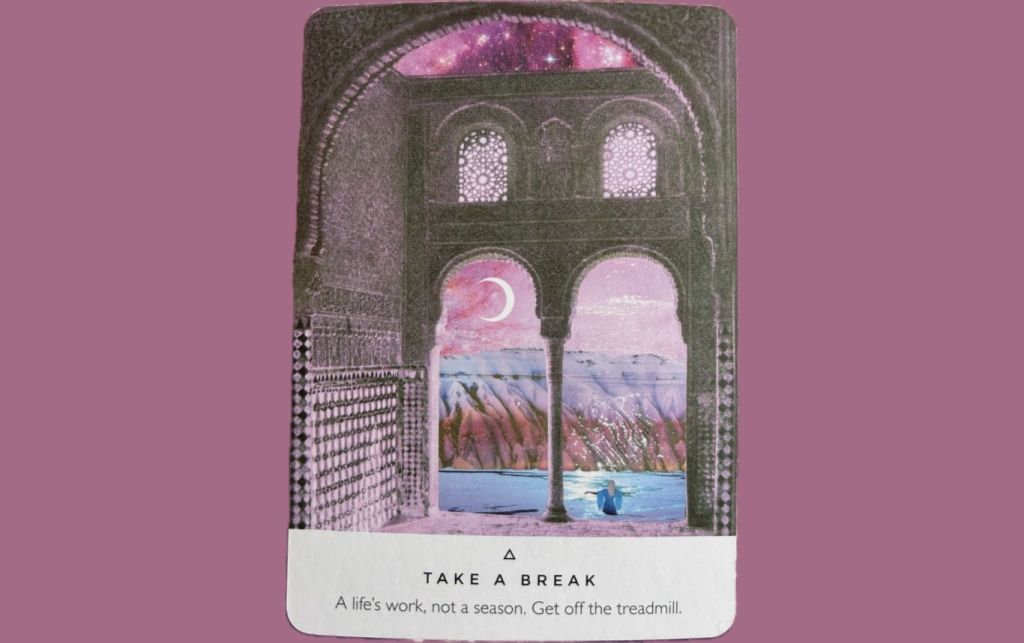
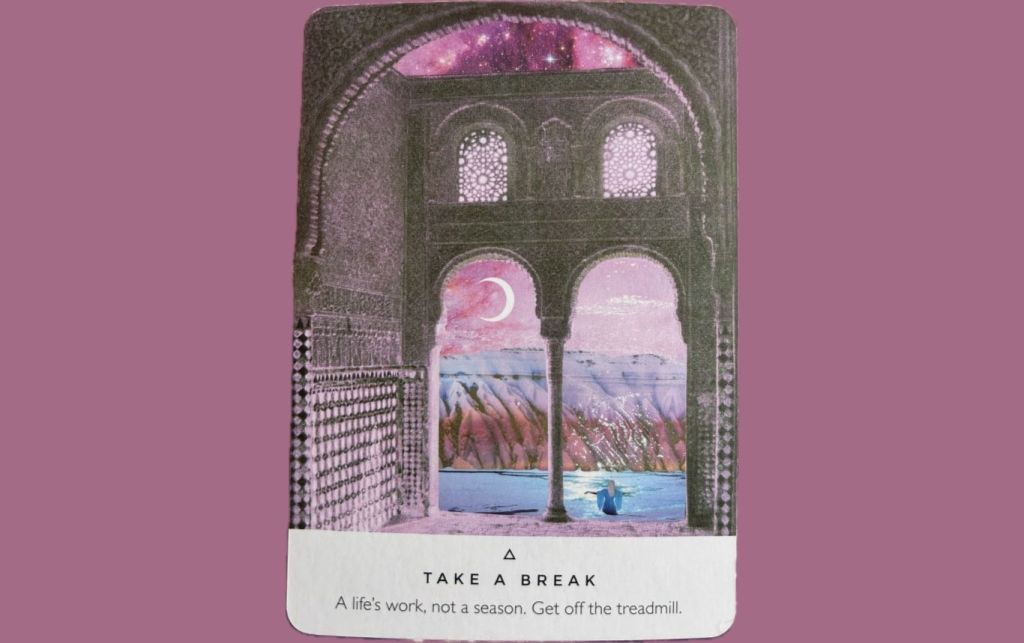
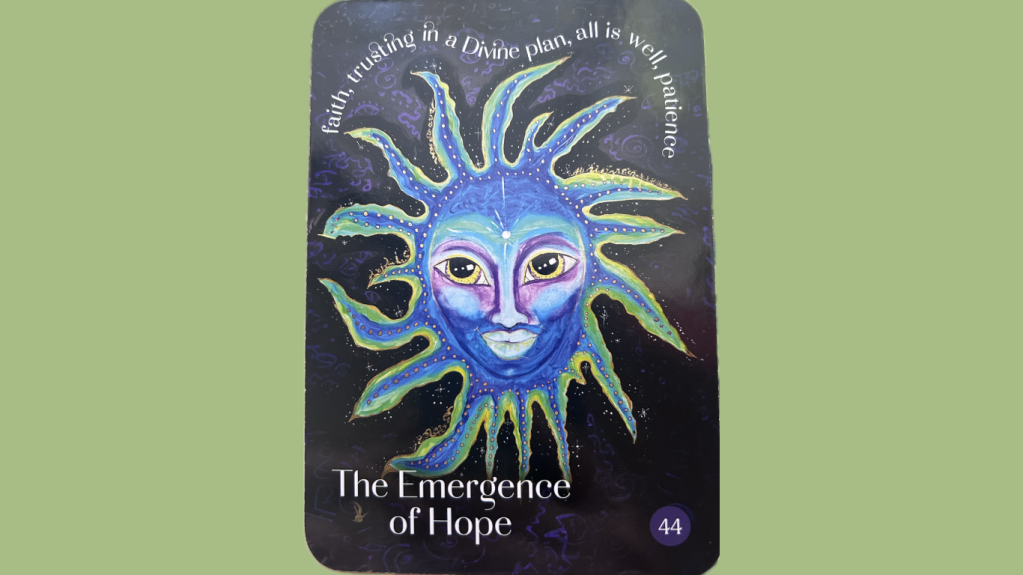

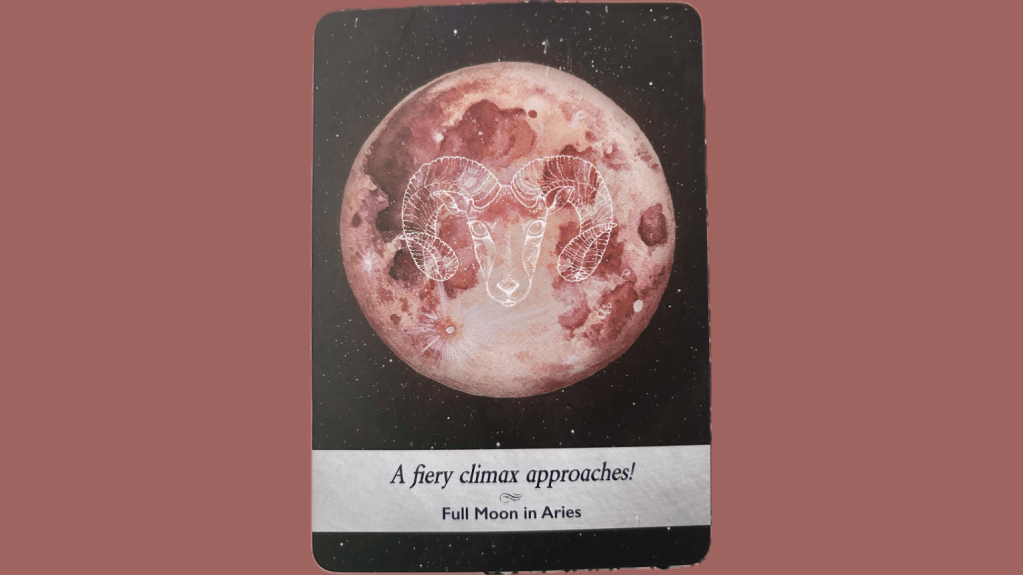
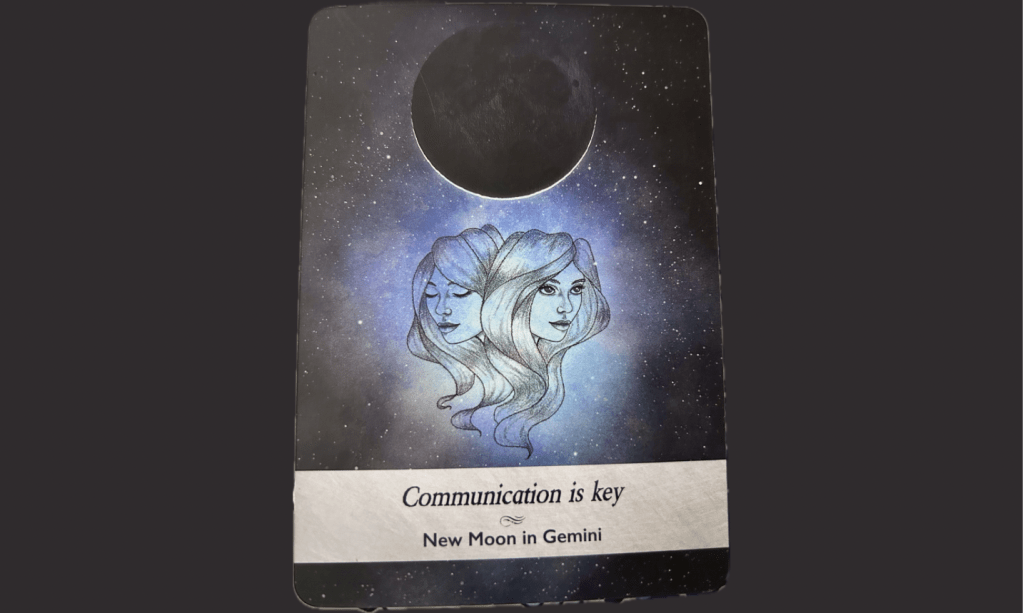

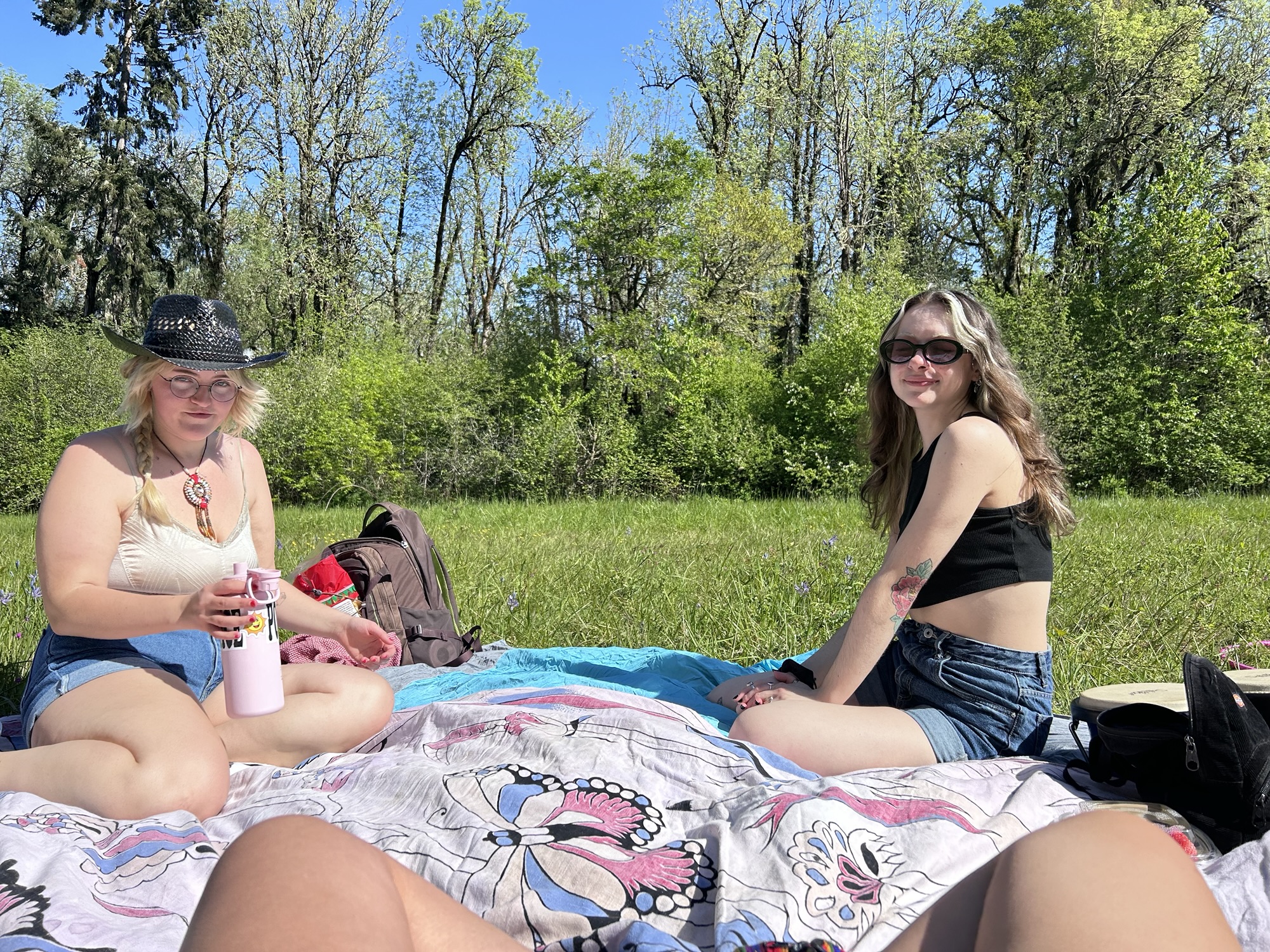






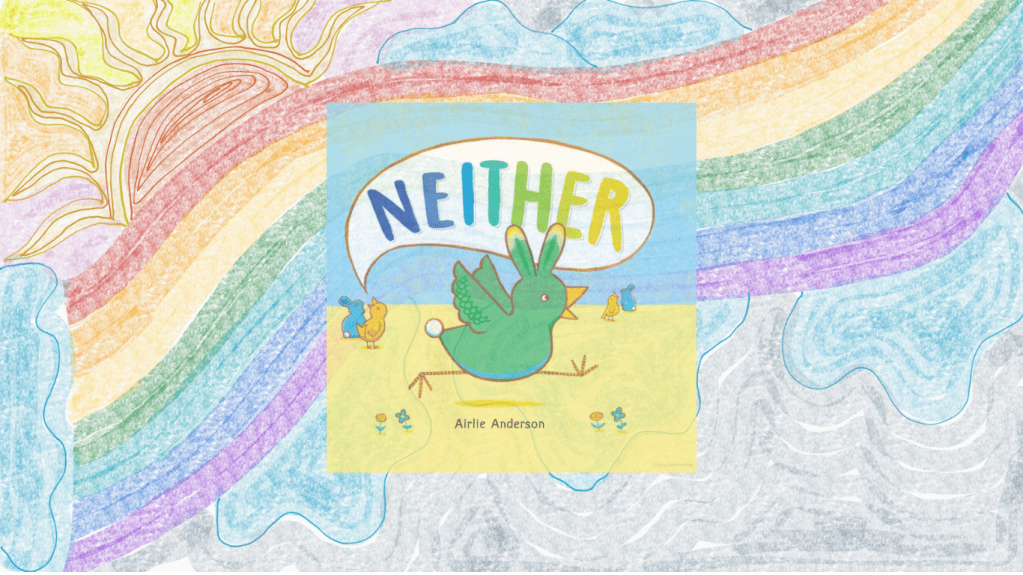

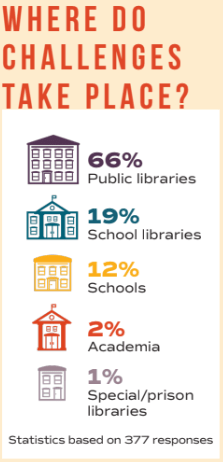
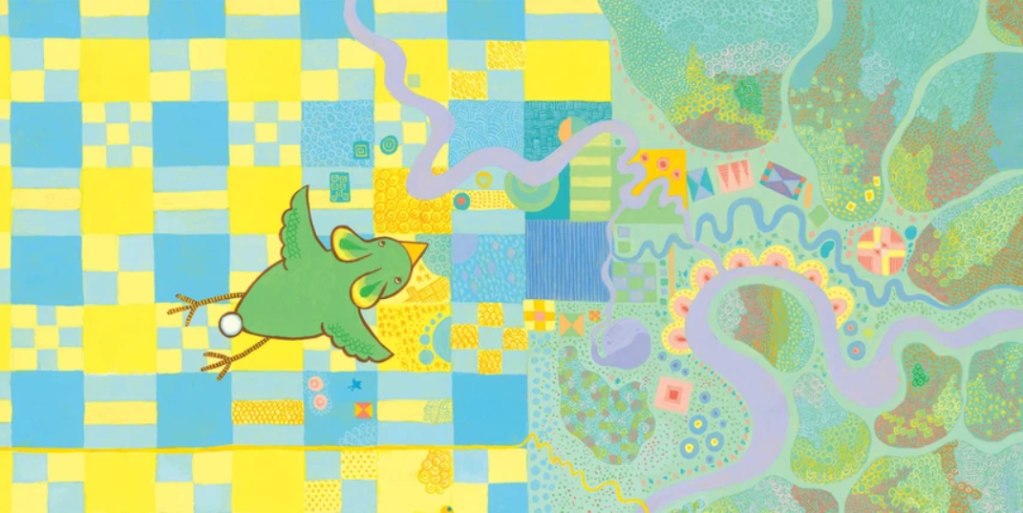

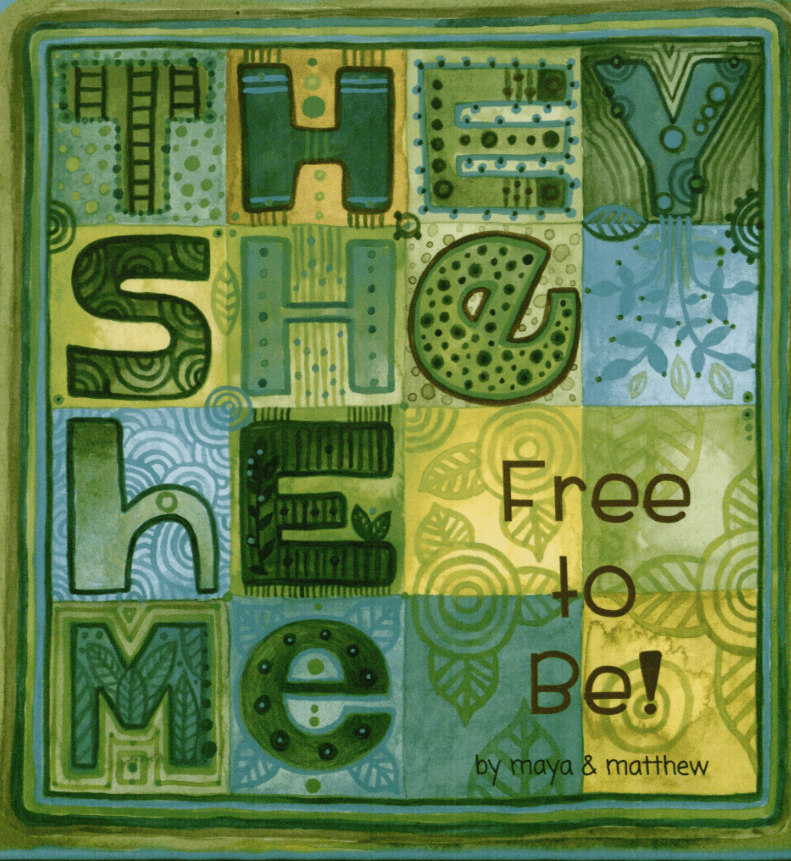
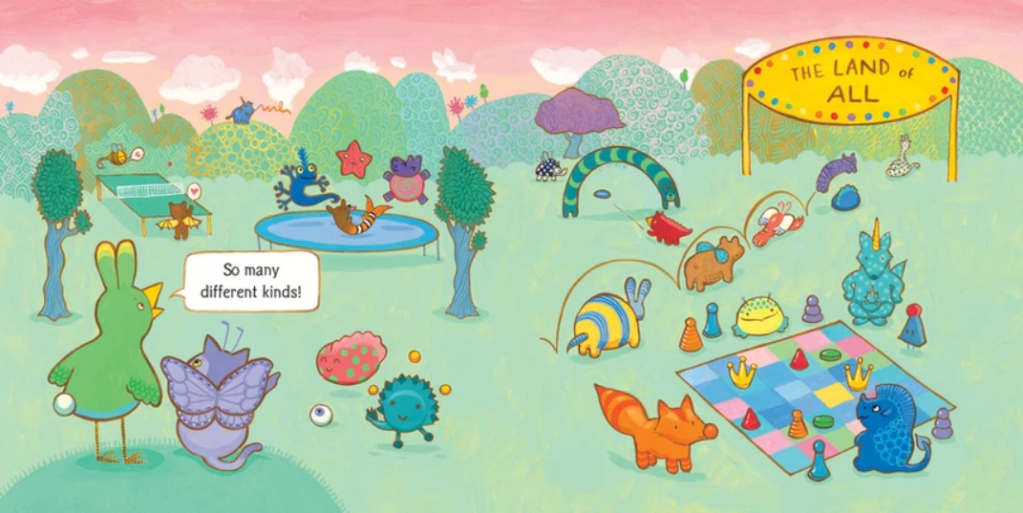



 The Writer's Oracle